
Diocese: Mangalore
Pioneers: Sisters Florine D Souza, Lucia D Souza
THE STORY OF CLARE SADAN
A Home of Care, Compassion and Hope
Every home begins with a dream. Clare Sadan Senior Citizen Home began with a dream born from compassion—the desire to create a safe and loving place where senior citizens could live with dignity, care, companionship and peace.
Situated in the serene surroundings of Kulshekar, Mangaluru, Clare Sadan is a ministry of the Ursuline Franciscan Sisters, Mangalore Province. Rooted in the Franciscan spirit of simplicity, service and compassionate love, the Home seeks to care for the physical, emotional, social and spiritual well-being of senior citizens.
The dream of Clare Sadan received a generous foundation when Mr. Thomas and Mrs. Helen D'Silva donated 18 cents of land for the construction of the Senior Citizen Home. With the support of benefactors, well-wishers, professionals and dedicated workers, the vision gradually became a reality.
A significant milestone was reached on 6 December 2022, when Clare Sadan was solemnly blessed and inaugurated by Most Rev. Dr Peter Paul Saldanha, Bishop of Mangaluru, in the presence of the Pioneers Sr Florine D Souza and Sr Lucia D Souza and Sisters of the Province, donors, Priests, well-wishers and friends. The occasion included Thanksgiving, prayer, the blessing of the chapel and premises, and a joyful gathering. It marked the beginning of a new mission of love and service to the elderly.
A HOME FOR COMFORT AND CARE
Clare Sadan provides a safe, peaceful and welcoming environment with comfortable accommodation, dining facilities, common spaces for relaxation and recreation, and essential facilities for the safety and mobility of residents. The lift, ventilation and other safety arrangements contribute to their comfort and independence.
The chapel offers a peaceful space for Eucharistic celebrations, prayer and reflection, enriching the spiritual life of the residents.
HOLISTIC HEALTHCARE AND SUPPORT
The health and well-being of residents receive special attention. Doctors from prominent hospitals and healthcare institutions in Mangaluru visit the Home for medical consultations and guidance. Residents can also avail themselves of the services of a psychiatric doctor, homeopathy doctor, physiotherapist and counsellors, according to their individual needs.
Regular health monitoring, medication follow-up, medical appointments, investigations and hospital visits are coordinated by the Sisters and caregivers. When specialized treatment is required, residents are accompanied and supported in accessing appropriate healthcare facilities.
CARE BEYOND THE HOME
Clare Sadan also assists residents in accessing essential services such as hospitals, banks and other necessary facilities. Support is provided for medical appointments, investigations, banking needs and personal errands, especially when residents require assistance.
A PLACE OF FELLOWSHIP AND JOY
Life at Clare Sadan is enriched through companionship, recreation and celebrations. Birthdays, festivals and special occasions are celebrated together, creating joy, friendship and a sense of belonging.
More than providing accommodation, Clare Sadan strives to create a family-like atmosphere where every resident is respected, listened to and valued. Each person brings a unique story and a lifetime of memories, and the Home seeks to honour those stories with love and dignity.
Today, Clare Sadan continues its journey as a home of care, compassion and hope, through the dedicated service of the Sisters, staff, healthcare professionals, benefactors and well-wishers.
Clare Sadan
Where every life is honoured, every story is cherished, and every day is lived with dignity, compassion and hope.

Diocese: Karwar
Pioneers: Sisters Jude D’Souza, Blanche D’Souza, Mable D’Souza and Syra Veigas
Bhatkal, a port town in Uttar Kannada District of Karnataka derives its name from the Jain King Bhattakalanka who once ruled Bhatkal. The town is located on NH-17 running between Mumbai, Mangalore, and Kochi. It has witnessed the rise and fall of several dynasties and rulers such as Hoysalas, Vijayanagara empire, Chola and Hyder Ali. According to 2011 India census, the total population of Bhatkal is 1, 12,000 both males and females constituting fifty percent each. The Muslim (Nawayath) and Hindu (Namdhari) communities are predominant. The Muslim community is economically well placed as many of its members are involved in business sector either in India or abroad. However, the Hindus and Christians are a poor lot in Bhatkal, who needed the services of the Sisters. Anand Aashram is located three kilometres north-east of the town of Bhatkal.
The Ursuline Franciscan Sisters serving since 1971 at Thernamakki, a substation of Christ the King church at Murdeswar, had been extending their pastoral service at Bhatkal, another substation of the same parish. They were motivated to render their services at Bhatkal on a permanent basis. Hence in 1973 they settled in a rented house consisting of two rooms and began teaching the children to read and write. Gradually they opened a primary school in the same rented house, adapting the rooms as shelter during the night and class rooms through the day. People esteemed their presence rightly as persons of God and persons for others.
In 1979 Fr Vincent Pereira, parish priest of St Antony church at Thernamakki helped them to purchase a two-acre plot in the present location of the convent premises. In 1980 a moderate hall was constructed which served as a school building for students as well as chapel for Catholics of the locality. Only after seven years, the Sisters could construct a proper school building and a new convent building, which were inaugurated on March 19, 1987. Meanwhile, the number of members had increased to seven involving themselves in teaching in the school, catechizing in the parish and substations and in carrying out social work at Murdeshwar, Shirali, Mundolli and Muglihonda.
On June 1, 2004 Anand Ashram High School was started at Bhatkal in the existing school building. The foundation of the new building was laid on November 22, 2004 and the building was inaugurated on March 28, 2006. In the same year a new ministry was started in the school premises, namely, spoken English classes to people of the locality; Sr Marie Therese was responsible for the venture. In 2010 a multi-purpose hall was erected on the second floor of the High School building.
The Sisters carry out pastoral ministry at Our Lady of Lourdes parish, Mundolli and at the substation of Muglihonda. The parishioners consist here of 200 and 80 families respectively. Preparing liturgy, catechizing, cleaning the parish church at Mundolli and substations at Murdeshwar, Muglihonda, Shirali, Karekal, Thernamakki, and Manki, operating as extraordinary ministers of the sacraments, preparing children for reception of the sacraments are their regular pastoral activities. Besides they animate SCC prayer meetings and summer camps, visit families on Sundays and Fridays and join in celebrations of other faiths. Sisters Ancilla Pinto, Marie Therese and Laura Pinto have made themselves available to share reflections on days of recollection.
Celebrations of golden and silver jubilee of religious profession of Sisters were occasions to look forward to amidst their hectic schedule. The golden jubilee of Sr Magdelene D’Souza and Sr Laureen Vas and the silver jubilee of Sr Delphine Tauro were celebrated on May 9, 1990. Sr Syra Veigas celebrated her silver jubilee on December 5, 1991 and Sr Lucella Coelho on January 1, 1996. Silver Jubilee of the establishment of Anand Ashram was celebrated on April 9, 1996.
Crosses were not wanting. The community had to face the sudden demise of Sr Laurine Vas on December 26, 1993. It was also a painful experience to the Sisters to adjust to the pain of their foundation house in Karwar Diocese, namely at Thernamakki being closed down on April 1, 1996. Then there was also a greater anguish on December 12, 1999 when 657 students out of 1300 demanded issuing their transfer certificate from the School ostensibly due to a play enacted on the occasion of the celebration of the School Day which allegedly hurt the Muslim community. Happily they changed their decision subsequently and returned to the School.
The Sisters have been reaching out to the people at Bhatkal through pastoral and educational ministry. Their life witness has been equally appealing. People have benefited from their life and mission.

Diocese: Mangalore
Pioneers: Sisters Benny D’Cunha, Candida Monteiro, Precilla D’Cunha, Reena S Serrao and eleven candidates
Assisi Nilaya, a new establishment of the Mangalore province was set up on June 1, 2013. The founding was necessitated by the fact of bifurcation of the Mangalore Province in which Sirsi – the existing location of the candidate’s house – was made over to the newly established Hubli Vice Province. In keeping to the age-old realization that initial formation of a Province ought to be held within the province, a house was purchased at Vorkady. As the house did not suit the purpose, the Home for Children at Vorkady established in 1938 was converted into the Candidates’ Home.
The renovation and alteration was made in helping with the new objective. The centre square of the structure which had been a garden thus far, had a multipurpose hall built in it; the existing chapel was enlarged by integrating into it the dining room of the Sisters, the kitchen of the Sisters was converted into a guest room, toilets and bathing rooms were constructed where needed. On June 2, 2013 the house was occupied by the candidates; it was renamed Assisi Nilaya after St Francis of Assisi, the patron saint of the candidates of the Congregation. Bishop Aloysius P D’Souza visited Vokady on August 24, 2013 to make a study of the situation. On November 19, 2013 the erection of the Community was done and the Blessed Sacrament was installed. Sisters Benny, Candida, Precilla, and Reena form the formation community. Eleven candidates hailing from Mangalore, Karwar, Bangalore, and Kerala commenced their formation at Assisi Nilaya on June 2, 2013. Sr Benny D’Cunha is in charge of the candidates, Sr Candida Monteiro administers the house, Sisters Precilla D’Cunha and Reena S Serrao teaches in the St Joseph School of the parish. Besides attending to the needs of the community, the Sisters involve themselves in pastoral activities of the parish. Sisters Precilla and Reena as vocation promoters of the Province undertake all possible trouble to obtain good vocations to the Province.
The community of Assisi Nilaya has several challenging tasks to attend to. To name a few, nurturing and developing the three- acre property which now includes only cashew trees and coconut palms, unfolding the wealth of Assisi Nilaya as a house that generates true followers of Christ, reaching out to the needy around, and being models of faith and hope to Catholics and other people in their surroundings.


Diocese: Mangalore
Pioneers: Sisters Marceline Rodrigues, Elfrida D’Souza, Ida D’Souza and Jane Frances Sequeira
Avila Convent is situated at the Narampady junction. The existence of three religious institutions – a church, a temple and a mosque – within a radius of few metres not only enhances the sanctity of Avila Convent, it also summons those within it for a crucial task of the Church, namely, the inter-religious dialogue. Need for inter-religious dialogue arises due to the fact that the area has frequent upsurges of communal violence. Dialoguing with other religions can help deal effectively with such tensions. Besides the deplorable ethnic reality, the socio-economic reality of Narampady is lamentable as well. As if to add to their misery, the petty plots of land they own are rocky and therefore uncultivable. The Ursuline Franciscan Sisters known for their fundamental option for the marginalized chose such a place for their mission. They arrived at Narampady on May 10, 1966. A house was put up for them in a one-acre plot donated by the parish priest, Fr Frederick Monis.
Having known that education was one of the best means to change any wretched situation, the Sisters took up teaching at Fatima Aided Lower Primary School. The school had been started in 1953 by Fr Michael Noronha and administered by the parish. It had classes I to V, and this has not changed even to date. What is more, it had sections for both Malayalam and Kannada. In 2009 a new building was constructed, which was situated a furlong south of Avila Convent. Under the able administration of Sr Constance D’Souza (1976-1984), Sr Mable D’Souza (1984-1996), Sr Leena Fernandes (1996-2004), Sr Mary Pinto (2010-2013) and Sr Helen D’Souza (2013- ) the school has been imparting quality education even though at the basic level.
Pastoral activities of the parish are accorded equal importance by the Sisters. The church dedicated to St John De Britto came into existence in 1942 when Fr Frank Peris, the parish priest of Our Lady of Dolours church, Bela, bought a piece of land from a Hindu and built a chapel on it. The present building was constructed by Fr Fredrick Monis in 1961. The parish consisting of 234 Catholic families with 1377 Catholics and formed into ten wards has been served by the Sisters in various capacities. Catechizing on Sundays and for reception of sacraments like Communion and Confirmation, animating YCS and Legion of Mary and altar servers, keeping the House of God ready for liturgy and distribution of Communion are some of the activities the Sisters perform at the parish selflessly. They also participate in SCC prayer meetings. A few of the wards have rendered service to the Convent as part of their SCC task.
In addition to their several apostolic activities at the Narampady parish, they serve at Bovikan, a substation of Narampady parish. Given the long distance they had to cover to reach the parish church, those parishioners were unable to attend Sunday services at Narampady. Hence, in 1982 a chapel was built there. On Sundays, one of the Sisters renders her service there for preparation of liturgy, singing, distribution of Communion and catechism. Even the Sisters residing at Avila Convent during their Teachers’ Training Programme, make themselves available to service in this substation. Bovikan celebrated its silver jubilee in 2007.
As empowerment and holistic development of people has been the key objective of the Sisters at Narampady, they have been involving themselves in socio-economic development of people as well. In 2006 they helped the economically backward and illiterate women of the locality to form themselves into self- help groups through which they produced foodstuff like pickles and papads for commercial purpose. They were also introduced to jasmine cultivation. In spite of their hectic schedule and limited human resource, the Sisters regularly visit houses of the sick, aged, families of students etc. They also coach the slow-learning children.
Avila Convent as an L-shaped structure gives the impression of a decrepit primary school. However, it represents total identification with the marginalized of Narampady. Various animators have toiled to maintain the Convent in its present form, especially by undertaking interior furnishing. Sr Prima Rodrigues who succeeded Sr Jane Frances, the first animator of Avila Convent, introduced cultivation of paddy in the vacant plot behind the Convent. Their manual work while proclaiming the dignity of labour, served as a means for self-sufficiency. Sr Sophia D’Souza managed to procure municipality water connection to the convent premises. Sr Mabel worked for obtaining an LPG (cooking gas), repairing the shed, and installing telephone connection to the community and boring a tube well. Sr Jerosa Fernandes undertook repairing the compound wall, interlocking the convent yard, repairing the convent roof, and fencing the boundary. During the tenure of Sr Mary Pinto, the dormitory was converted into fibre partitioned cubicles, kitchen roof was repaired, the bathing rooms and guest room were renovated and plantain trees were planted in view of achieving self-sufficiency.
In spite of its congested state, Avila Convent has been rendering a great service to the Congregation by accommodating Sisters pursuing their Teacher Training studies at Maipady in Kerala. An incident that will go down the annals of Narampady was a road accident in which Sr Leonora was injured beyond any hopes for survival. The disaster had occurred while they were travelling to Mysore to attend the priestly ordination of Sr Suchita’s brother. Belying our fears she recovered after an intense treatment for five months. Commendable lifestyle of the Sisters at school, at the parish, and in an ordinary dwelling has inspired nearly eighty boys and girls from Narampady to choose religious life.

Diocese: Mangalore
Pioneers: Sisters Rita D’Souza, Speciosa Alvares, Jude D’Souza and Lidwin D’Souza
The Ursuline Franciscan Sisters arrived at Siddakatte on March 1, 1971 at the invitation of Fr Raphael D’Silva, parish priest of St Patrick church. The objective of their presence was twofold, namely collaboration in the pastoral work of the parish and teaching at St Patrick Primary Kannada Medium School. For their residence, a house in conjunction with a plot of land was bought from Mr Francis D’Souza, who had five of his sons as priests and four daughters as nuns. The Sisters’ immediate task was to address the demands of their mission at Siddakatte.
In fulfilling the first objective, the Sisters taught in the school including the nursery classes; the school building lies one hundred metres away from the Convent, across the road. Their commitment to teaching apostolate along with compassion towards the children brought about considerable progress, academic in particular, within a short period. The importance they accorded to education at Siddakatte did not deter them from taking up teaching at Loreto Aided Higher Primary School at Loreto, which lay 14 kilometres away from Bal-Christ Nivas at Siddakatte. They commuted to the location on a daily basis. Sisters Olivia Sequeira and Verine Suares are fondly remembered for this self-giving mission. The parish got a new school building constructed with the help of donors. A dilapidated and congested structure was replaced with a three-storied building in 2010.
In view of empowering women and girls of the locality, they conducted tailoring and needle work sessions in the Convent. A large number of women benefited from the project. The Mother and Child Care health programme was another important initiative they monitored in view of ameliorating the pitiful condition of women. These have been empowered also by way of literacy, adult education, and self-employment like preparing soap. The schemes of literacy and tailoring were closed in 2010; this is because women of the locality were able to secure employment in a cashew factory. Still the Sisters continue to reach out to women through self-help groups. They monitor and animate them.
In the parish, the Sisters undertake sacristy work, catechize children, and animate Sodality of Children and the Association of Altar Servers. They visit families regularly. As Bal-Christ Nivas had to manage with meagre income of a single teaching post in the school, it became necessary for them to explore alternative means of livelihood. Hence in 2007 Sr Benny Correa started a nursery class in the Convent. Beginnings were precarious with only four children in the class. Currently, under the management of Sr Diana Saldanha, a steady increase in number has been taking place. She has started both lower and upper kindergarten sections. Her determination to develop the school, takes her to distant regions of Siddakatte in search of children. Hassles are plenty, but the nursery school meets its objective to a large extent.
Certain events in the history of Bal-Christ Nivas are worth a mention. A new convent building was put up in 1996 in the same location. Sr Clemence Noronha, animator of the community shouldered the responsibility. Successive animators endeavoured for economic self-sufficiency of the Convent. Sr Agnes Andrade had a tube well sunk and a pump installed in 2000. With adequate water from the well, several agricultural activities were undertaken subsequently. These are: planting three hundred areca saplings, jasmine plants and vegetables. Coconut and areca trees were irrigated regularly. However, the water source dried up within a short period due to sinking of several tube wells in the vicinity. Alongside, the cultivation too had to be wound up. Sr Shanthi Lobo, animator of the community, a water diviner herself, came to the rescue. Under her guidance, in 2012, a new tube well was sunk right in front of the Convent, which supplies sufficient water; it has enabled resuscitation of the agricultural activities. Sr Servella Rodrigues who served at Siddakatte for eleven years celebrated the golden jubilee of her religious profession on April 17, 2006.
The fruitful and committed work of the Sisters at Siddakatte has been the cause of immense development at the place. Nonetheless, the area and its surroundings project an impression of an underdeveloped area. Given this reality, the Sisters need constant support and encouragement to keep going with trust and hope in the Lord who has called them even to carry his Cross. The Lord who guides the course of their life and mission will surely give them enough strength to carry on joyfully.

Diocese: Mangalore
Pioneers: Sisters Helena Menezes, Mable D’Souza and Susheela Sequeira
Venur is a small village on the banks of Phalguni River in Dakshina Kannada. It had been once the seat of Jainism. This fact is evident in the monolith of Bahubali also known as Gomateshwara, erected in 1604 on a high platform in the banks of river Phalguni. Venur also has been a habitat of a large number of converts to Christianity who had accepted the new faith thanks to the evangelization work of the missionaries from Italy. The converts had to be supported to grow in their faith. The Ursuline Franciscan Sisters accepted the responsibility. They arrived at Venur on July 8, 1972 at the invitation of Fr Elias D’Souza, parish priest. They were offered the farm house of the parish as their residence; it exists to date as its stock room. Residing in abject conditions must have certainly served as a facilitating factor in their mission among people, a vast majority of whom were poor.
Having realized that education was an excellent means to accomplish their assignment, they took up teaching at St Jude Higher Primary School of the Venur parish, situated a kilometre away from their residence. In 1986, they were entrusted with the responsibility of administering the School. Sisters Mary D’Souza, Angeline D’Souza, Luella D’Souza, Olivia Sequeira and Benny Fernandes as head teachers along with other staff members have given themselves totally for the progress of the School. Their labours have borne fruit in the form of ranks secured in the class VII Board Exam. As the school building was in a bad shape, a new building was constructed and inaugurated on May 29, 1992.
A second scheme they initiated in accomplishing their task was establishing a centre named Grihini. Indicative of its name, it brought about resourceful empowerment of women. The Sisters over the years have borne scores of hassles to initiate the project, to construct buildings, to develop and to form the Centre people-friendly. Having been supported by donor agencies from India and abroad, the Centre has realized a sea change not only in the area of faith, but also in economic, moral, social, and political arenas.
The Sisters have been performing pastoral activities at Christ the King parish with total commitment. Their task consisted of all exercises in the church and in the parish as their fellow religious performed in other parishes. Their pastoral assistance outside the parish has been remarkable. They have helped at St Francis of Assisi substation at Perady for seven years (1990-1997) which lies four kilometres away from the Convent and at Our Lady of Perpetual Succour church at Gantalkatte for two years (1988-1990) which lies nine kilometres away from the Convent. As both these places are located at a distance, the Sisters have sacrificed a great deal to reach there regularly on Sundays. Sisters Angeline D’Souza and Madtha D’Souza have a claim to be remembered for undertaking the mission at Gantalkatte for two complete years.
The Sisters had some time to think about their well-being after thirty-five years of their life at Venur. Their house, constructed in 1976 in a plot of land offered by the parish demanded their attention. Thus, in 2007, the corridor of the house was renovated, the yard furnished with interlocks and an access way from the main road to the Convent was constructed. The Generalate financially assisted in this project. Procuring sufficient water has been a constant problem at Christu Raj. Having drawn on the benevolence of the parish for a long time, a tube well was sunk in the convent campus in 2008. It provided sufficient amount of water, which has enabled a plantation of two hundred each of areca and coconut saplings.
Christu Raj Ashram has been of service to Sisters of the Venur Zone since the inception of zones in Mangalore Province and Christu Raj Ashram’s choice as the zonal house. It organizes various zone level activities, and this has firmed up the bond of Sisters. The Convent has also catered to the pre-novices of the Congregation for three years. At the termination of the pre- novitiate programme at Bijapur in 2007, Christu Raj Convent has made available all possible assistance to the pre-novices for three years, with each of the batches being accommodated for one full year.
By and large, then, it can be asserted that the Sisters of Venur have succeeded a great deal in the task entrusted to them. The fairly large number of vocations to priestly and religious life from Venur is a clear indication to the fact that they have succeeded in forming the faith of the people.

Diocese: Mangalore
Pioneers: Sisters Ottilia Pinto, Angeline D’Souza and Margaret D’Souza
The Ursuline Franciscan Sisters arrived at Mogarnad at the invitation of the parishioners and parish priest, Fr Harold Menezes, with a twin objective of teaching at St Anthony Higher Primary School of the parish and assisting the parish priest in pastoral activities. For a start, they resided in a room of the parish school. Impressed by their service and ideal presence, the parishioners gifted them three acres of land, to which the Sisters added an extra acre. The Sisters utilized the land by way of cultivating coconut palms, cashew and fruit trees, vegetables, and jasmine bushes. Their house came to be a reality on May 4, 1979. Fr Herald Menezes was their support and guide in this achievement. He himself supervised the construction of the building.
The St Anthony Higher Primary School made impressive progress ever since the Sisters began administering it. Sr Angeline D’Souza as head teacher of the School ever since 1976, along with the Sisters of her community visited practically every house in and around Mogarnad in the process of upgrading the School to higher primary level. The number kept increasing gradually from 150 to 400. The head teachers of the School, Sisters Angeline D’Souza, Candida Monteiro, Celesta D’Souza, Agnes Fernandes, Emerita Monteiro, Maureen D’Souza and Enet D’Souza strove relentlessly for empowering their pupils not merely academically but spiritually and morally too. It can be asserted that reminiscences concerning Sr Angeline have been imprinted in the heart and mind of people at Mogarnad. The extent of her love and care for pupils in the School for twelve years as also for the people at Mogarnad for 17 years was evident from the large number of parishioners present at her funeral service at Holy Rosary Convent, Jeppu on February 10, 2013. That her untimely death caused due to bone cancer left a void in their heart was obvious on their face and in their words. The parish started Deva Matha English Medium School in 2004 during the tenure of Fr Leo Lobo. Sr Enet D’Souza, head teacher at St Antony School extended her assistance in obtaining permission from the education department for the school.
The Convent and compound has received needed refurbishing time to time. Sr Rose D’Souza, animator for eleven years put up the compound wall; Sr Enet D’Souza renovated the convent building specifically by repairing the rickety roof; Sr Gracy D’Souza focused on developing the agricultural land. To this effect, she undertook tasks such as levelling the ground, planting coconut saplings and jasmine plants. The Sisters work strenuously in the school, in the parish, at home and in the compound. A pre-novice, who spent a month at the Convent in 2013 as part of her community experience, described their lifestyle wittily: They work so much that they have no time to eat and no time to sin’. Is not this the best compliment a community of Sisters could receive from a formee? Sisters Candida Monterio, Celesta D’Souza, Rose D’Souza, Emerita Monteiro, Enet D’Souza, and Gracy D’Souza have been animators of the community at Mogarnad.
The Sisters render unstinted service at the parish and the parish church. They carry out pastoral activities just as in other parishes. Besides, they animate SCC prayer meetings in ten out of fifteen wards of the parish. Being true to their charism of parish apostolate, they have extended their services to Salethur parish too. Sisters Ottilia Pinto and Janet D’Souza rendered socio- pastoral services there for three years, namely, from 1999 to 2002. Preparation for Eucharistic celebration on Sundays, catechizing children and First Communicants, and joining people in celebrations of their joyful events are a few of the pastoral activities of the Sisters at Salethur. Sr Ottilia worked as a social worker for a year. When Salethur became an independent parish on February 9, 2002 under the care of Pilar Fathers, the Sisters brought their services to a halt officially. However, they continue to render their services at the request of the parish priest as and when needed.
Life witness of the Sisters has drawn many young girls and boys to consecrated religious life. Nineteen among them are Ursuline Franciscans. In view of recruiting vocations, vocation promotion camps are conducted regularly for students of class X. There have been events that brought joy to the community: golden jubilee of Sisters Dorothy D’Almeida on May 5, 2008, Esther D’Mello on May 14, 2013 and silver jubilee of Sr Agnes Andrade on May 5, 2005. Pilar Fathers from Salethur, Capuchins from Farangipet and Franciscan Fathers from Bannur assist the Sisters in their spiritual pursuit. With support from the Mother of God, the Sisters at Mogarnad have been enabling people to encounter her Son Jesus Christ by their commendable presence.

Diocese: Mangalore
Pioneers: Sisters Mary Braganza, Rose Marie Souza and Rosalie Mendonca
Karopady is situated 46 kilometres away from Mangalore city. The parish church at Karopady, in the form of a tiny chapel came into being in 1889, as a result of having been carved out of Panir parish, earlier known as Ullal-Panir. The tiny chapel was raised to the status of a parish on August 1, 1910 with a resident priest who was in charge of Vorkady parish as well. Fr Gregory A D’Souza, the first parish priest transferred his residence to Vorkady; Mass was celebrated at Karopady every alternate Sunday. Fr Victor Rosario Fernandes, parish priest, later the Bishop of Mangalore Diocese, rebuilt the façade of the church and developed the parish. He also established St Lawrence Elementary School. A permanent resident priest was appointed to Karopady only in 1927. By then things were beginning to take shape at Karopady. Nonetheless, administering a parish and managing a school efficiently were extremely difficult for a single individual, particularly as the parishioners were leading a hand-to-mouth life.
In such circumstances, the Catechist Sisters of St Ursula arrived at Karopady. Their task was to collaborate in the field of education as well as in pastoral activities of the parish. Fr Jerome M Pinto, parish priest invited them due to his conviction that the Sisters would readily work for the apostolic demands of his parish and that they would fulfil those demands with a spirit of collaboration. Bishop Victor R Fernandes of Mangalore Diocese endorsed the conviction by doing the needful for the arrival of the Sisters at Karopady. Mr Paul Monteiro, parishioner as well as a teacher of St Lawarence Elementary School donated the land to the Sisters where they built a small residence. As the entire region, including the parish church, was reeling under abject poverty, they could not expect financial help from any quarters in the parish.
The Sisters undertook to address the appalling condition of the place. Their four establishments already at Bolar (1901), Vorkady (1927), Bejai (1931) and Fajir (1938), – all of them struggling in conditions of deprivations – had taught them that literacy/education was the best approach to deal with the precarious situations they found themselves in. Hence they took up the responsibility of teaching at St Lawrence School. Circumstances were so bad that they had to deal with half a dozen children in the whole school and with zero attendance of girl children. By way of handling the problem they started a home for the children known as Shanthi Ashram in 1962; three years later, in 1965, it succeeded in securing government aid. Their scheme proved fruitful; the number of students increased steadily. In order to afford better facility to children, an acre of land was purchased from the Sri Madanantheshwar Temple at Manjeshwar on August 30, 1974 and two cottages were put up to accommodate boys and girls separately. Fr Edwin Pinto was a God-sent angel as he had been at Vorkady and Panir. He supported the project financially through the Andheri Hilfe charity fund. Sisters Margaret D’Souza and Maria Rodrigues, both lovers of the poor, spared no efforts in realizing expectations of the Children’s Home. Over the years, the Children’s Home has made immense progress, St Lawrence School has turned out to be a centre of learning, and Karopady is certainly transformed. However, as if to terminate their sixty-year duration in the educational field history, Sr Luciana Pinto the last teaching Sister at St Lawrence School, retired from teaching in 2010. Nonetheless, Sisters are reaching out in educational field as and when necessary: Sr Jeneveera Noronha, at the request from the parish, served for one year at St Lawrence High School started in 2009.
Besides undertaking teaching in the school, the Sisters have addressed professionally the issue of health and hygiene at Karopady as that was a crucial concern of the area. Sisters Mary Mendonca, Lucy Lobo and Rosa Dias rendered their valuable services at St Lawrence Hospital; it was started by Fr Peter Serrao in 1995. Their service in the hospital was brought to an end in 2002 when the Franciscan Hospitallar Sisters took over the hospital. It goes unsaid that pastoral apostolate has been integral to their existence at Karopady. Catechizing, maintaining cleanliness of the House of God, attending to various needs of the parish as in other places are the usual pastoral activities at Karopady.
As stated at the beginning Karopady has been a challenging mission area for the Sisters. However, the ‘bear-like Ursulines’ have faced the challenges with determination and achieved enviable results in their apostolic work even at the cost of losing life. Two names can be mentioned as a case in point. Sr Rose Marie, animator of the house suffered pulmonary tuberculosis and died on August 21, 1957 and Sr Angela Menezes breathed her last on April 29, 2003 due to a cardiac arrest. At the same time, they had to explore alternative measures of survival since no teaching posts were available in the school. Hence a nursery class was started in 2005, 100 children benefit from the school.
Their rickety residence of over sixty years required urgent attention. In 2003 Sr Lenita D’Souza, Provincial Councillor in charge of land and building worked towards attaining decent living conditions for the Sisters by renovating the existing building. Other requirements like sinking an open well and installing an astra ole were undertaken. The Children’s Home, Shanthi Ashram continues to cater to children. Currently 46 children benefit from it. Students from abroad, as part of their study curricula, arrive at Shanthi Ashram annually and spend time with the children.
Karopady has been a changed hamlet today even though the changes may not be remarkable. The Sisters keep themselves open to the designs of God that are disclosed to them day by day in and through the service of God and their neighbour.

Diocese: Mangalore
Pioneers: Sisters Carita Sequeira, Martina D’Almeida, Jude D’Souza and Eugenia D’Souza
The Ursuline Franciscan Sisters received an invitation from Fr J B Alvares, parish priest of St Ann Church, Kelarai to render their service in the parish and in the primary school. Sr Genevieve Castelino, Superior General, responded positively to the request by sending Sisters Carita Sequeira, Martina D’Almeida, Jude D’Souza and Eugenia D’Souza to Kelarai on July 14, 1958. While occupying a portion of the house of Mr J S Alvares, a well known novelist, writer and editor of the weekly Dirvem, at Kelarai for ten months, and carrying on their regular activities at the parish and in the school, they worked for constructing a convent building. The house was put up in a half-acre land given by the parish. In addition, a two-acre land was purchased from Mr J S Alvares. The convent building was ready for inauguration and blessing on May 31, 1959. It was placed under the patronage of Our Lady of Fatima.
Kelarai has a jagged topography with lowlands, hillocks and above all a granite-constituted rocky surface, which renders cultivation arduous; moreover, the tiny plots of land people own further complicates the process of agriculture. This reality had trimmed down the means of livelihood; as a result, poverty was extensive in the region. The Sisters attempted to address the situation through education. They began teaching at St Joachim Lower Primary School started in 1937 by Fr Gratian Mathew Goveas. Sr Eugenia carried the school forward in the process of growth during her ten-year tenure (1958-1968) as head teacher. Successive head teachers, Sisters Barbara Franko, Emma Vas, Candida Monteiro, Irene Castelino, Maureen D’Souza, Agnes Fernandes, and Luella D’Souza maintained the legacy of the school. Finally in 2011 the Sisters brought to an end their teaching ministry in the Primary School with Sr Matilda D’Sa being the last teaching Sister.
Fr J B Alvares had envisioned establishing a high school at Kelarai. In view of this he put up a high school building in 1972 at a distance of half a kilometre from Fatima Convent. The school was made over to the UFES’ management. The High School campus consists of four acres of land; two acres, gifted by Fr J B Alvares, and two more acres, purchased by the Sisters from the diocese. The High School was named Amritlalji, Hindi version of the name St Joachim the patron of the Primary School. Sisters Innocence D’Souza, Nonnita Pinto, Flavia Tauro, Ancilla Pinto, Leena Rodrigues, Theresia Serrao and Letitia D’Silva have been its head teachers over the years.
Being true to the objective of the High School, the Sisters have been offering quality education to students of Kelarai and its suburbs, most of whom are poor. They visit families of students in order to learn about their situation. Ecology, health, and hygiene have been other areas of focus at the School. Their toil has borne excellent success in the form of securing 100 percent results three times in the SSLC exams. The students perform extremely well in extra-curricular activities such as games and sports. The Bharat Seva Dal unit of the High School has created history by bagging the shield in march-fast performance on the Independence Day and Republic day parades at the district level. The School celebrated its silver jubilee on December 12, 1997. On the occasion, the foundation stone was laid for a hall, which was inaugurated at the completion of its construction in 2001.
The Sisters render wholehearted service in the parish church. Besides they attend SCC prayer meetings in twelve wards of the parish, animate youth camps and CLC and YCS meetings. They prepare the children for the reception of sacraments, distribute communion, visit the sick in the parish, pray with them, and share their joys. Sometimes they pray with the parishioners in the Convent chapel. They animate the Women Association and conscientize them on the prevailing social evils. They encourage and support the Catholics to contest in civic polls.
The Convent building has been remodelled and renovated over the years according to the needs of the Sisters. In 1979, a new building was constructed, in 1993, the kitchen was renovated and the floor of the Convent was replaced with tiles. A new block was added and was inaugurated on January 10, 2002. On this occasion, the Generalate and the Provincialate gifted five cots and ten cupboards respectively. Sisters Carita Sequeira, Eugenia D’Souza, Barbara Franko, Emma Vas, Claudia Tauro, Candida Monteiro, Lilia Rasquinha, Ancilla Pinto, Lilly Pinto, Benny Lobo, Annie Sequeira, Marita Veigas and Elize D’Costa have been animators of Fatima Convent ever since 1958. Fatima Convent has made itself available for programmes of the Congregation and the Province. They include a six-day programme for postulants of the Congregation in 1983, a retreat for forty Sisters of the Province and a junior Sisters’ programme. The Sisters of Fatima Convent have made joyful contribution towards these programmes.
There have been celebrations at Fatima Convent: The golden jubilee of the Convent was celebrated on May 2, 2009. The silver jubilee of the religious profession of Sr Maureen D’Souza was celebrated on May 26, 1993, of Sr Leena Rodrigues on May 9, 1998 and of Sr Letitia D’Silva on May 26, 2006. Sr Crispine Braggs celebrated the golden jubilee of her religious profession on May 9, 1996.
Fatima Convent attempts to respond to the needs of the times suitably. In 2013, a boarding house for high school children has been started in the Convent. It has six children. The Sisters continue the good work initiated in 1958 with the spirit of dedication and faithfulness to their charism.

Diocese: Mangalore
Pioneers: Sisters Monica Mascarenhas and Isabel Theodore
The establishment of the Holy Face Convent at Vorkady in 1927 is a remarkable event in the history of the Ursuline Franciscan Congregation (Pious Association of St Ursula). This is because to a large extent the fact owes itself to the audacity of its two pioneering members, Sisters Monica and Isabel, both in their late 60’s. They launched into a new region when the Congregation was still in a nascent stage in several respects. This might be seen in their residence, apostolate and means of livelihood.
The first book of History of the Congregation ‘Branch of the Vine Fruit of the Branch’ pp 80-82 expounds their residence as ‘a corner of the old school hall with domestic animals for their company’, their apostolate as catechizing children and brides of the parish, tending the sick with simple medicines, mending clothes at a nominal fee, instructing at the St Joseph Primary School existing since 1898 and administered by the parish, taking care of the House of God, establishing a Children’s Home in order to acquire figures to a St Joseph School languishing for want of number and their means of livelihood as practicing indigenous and even desperate occupations like flower gardening, tailoring, overseeing a tiny textile shop, rearing cows, managing the local branch of post office. This illustration endorses the fact that they executed loyally the description they had furnished of themselves, ‘aspiring ... to do God’s work in the parishes’ while exploring the possibility of launching outside the premises of Rosario Cathedral, at Bolar. Their life witness at Vorkady was so impressive that they secured two candidates already in 1929.
Their commitment in the service of the Kingdom of God was duly appreciated. Benevolence overflowed through benefactors and especially through Fr Denis L Mathias, the parish priest at Vorkady, who was the brother of Mother Mary Agnes Mathias (Superior General 1945-1955). He was a pillar of strength to the Sisters until he left Vorkady in 1933 and even later. The pioneers and those who joined them subsequently were ready to set foot anywhere in any field of activity so far as it contributed to the achieving of their objective of ‘doing God’s work in parishes’. Sr Alicia Suarez took up teaching at St Joseph Aided Upper Primary (AUP) School at Kaliyur which graded up to class IV. Fr Cyprian Coelho had constructed it in 1898 in view of giving voice to the voiceless of Vorkady and its vicinity. The school has been upgraded to Upper Primary, i.e., V-VII in 1995. Ever since the administration of the school by the Sisters in 1935, the school excelled in curricular as well as extracurricular activities. Currently, the School with a history of 115 years has 730 students; they are guided by 24 staff members. The school building was constructed anew and inaugurated in 2010.
In answer to the demand of an English medium school, the Ursuline Franciscan Educational Society began St Joseph English Medium School in 1994. It was renamed St Mary English Medium School in 1996. Having started as a nursery school under the leadership of Sr Florine Vas in 1993-94, the school kept excelling eventually. Its present figure, 562 and the cent percent results in SSLC have been the outcome of the hard work of the Sisters, the head teachers in particular. They are Sr Barbara Franko (1994-1998), Sr Benedicta D’Souza (1998-2004), Sr Juliana Pais (2004-2011) and Sr Leena D’Souza (2011- ). In 2002 the school was upgraded to high school level. Unluckily it has not secured yet permission or recognition from the education department despite endless efforts of the Sisters. Two acres of land has been purchased in 2007, in which a playground has been raised.
In the parish, the Sisters render yeoman service. Its 390 families are divided into fourteen wards. The Sisters participate in SCC prayers of six wards on Sundays. Besides, they catechize, maintain cleanliness of the House of God, guide Legion of Mary, Marian Sodality, YCS, and altar servers. They visit families and pray Rosary there. In addition, they help out at Our Lady of Fatima parish in Miyapadav, constructed by Fr Andrew Rodrigues. A parish with 170 families and 774 Catholics is helped by the Sisters by way of catechizing, helping in liturgy, singing, and animating the Sodality of children. The responsibility was passed over to the Holy Face sub-community residing at St Joseph Orphanage in 2008. Service is rendered also at the Holy Family chapel at Votepadpu started in 1998 by Fr Peter Serrao. Two Sisters catechize on Sunday afternoon, maintain cleanliness and ornamentation of the chapel and assist in liturgy.
The Sisters at Vorkady continue to live in a spirit of self- giving after the example of their pioneers. Sr Mary Pinto has rendered her service as head teacher for a year at ALP School, Kapiri during the year 2009-2010. As Vorkady still remains an underdeveloped region, to alter its abject condition, several measures have been undertaken. In 1993, women were trained in typing and tailoring. Slow-learning students are coached and families of students are visited regularly. Gram Sabha meetings are attended and its benefits are made available to people.
Property litigation seems to be a common curse of the early establishments of the Ursuline Franciscan Sisters. Just as in Madanthyar, in Vorkady too, the Sisters had to wrestle with the land problem. As much as 1.92 acre of their land was encroached upon by a neighbour. Starting from Sr Eliza Pinto (1970) through Sr Benjamin D’Souza (1984-1990) to Sr Suchita Sequeira (1990-1995) it proved to be a struggle indeed. Sr Suchita managed to secure a happy settlement. At the guidance of Fr Lawrence Martis, parish priest of Vorkady, she approached Ms Nirmala Baliga, social worker from Manjeshwar and Chandrahasa Shetty, lawyer who helped to resolve the problem. The Sisters reclaimed the 1.92-acre land in 1992 after long 27 years. As construction of an English medium school was proposed in the plot, the opposite party put forth a stay-order due to the fact that they had their house constructed in the encroached 10 cents of the convent property. Having been tired of the long-standing litigation, Sr Hazil D’Souza (1995-2001) decided on a compromise according to which they received 40,000.00 as land value. However, they had to forego a few good mango and jack trees. Thus a curtain was drawn on the festering litigation in 1998.
The successive animators have concentrated on furnishing the convent building. Sr Carmine Lobo (2001-2007) transformed the existing dormitory into cubicles; a guest room, infirmary and a room for the animator were constructed as well. In addition, an open well was sunk and water harvesting was undertaken. Sr Laura Pinto (2008-2009) constructed a pump shed; Fr Apolinaris L Crasta permitted to obtain electricity connection from the pole in the church campus. The present Superior, Sr Leena D’Souza (2009- ), constructed a kitchen, dining hall and a dormitory. She also bored a tube well in 2009. The Convent was equipped with a computer in 2008. Fr Peter Mascarenhas SMM was instrumental in collecting needed finance for the cause from Sr Daphney SRA, Vamanjoor. In view of obtaining self-sufficiency, a vegetable garden, fruit trees, cashew trees and a flower garden have been maintained. The Sisters at Vorkady have been doing well in spite of all odds. Possibly, along with their own commitment, the spirit of Sr Isabella Theodore, the pioneer who was laid to rest at the backyard of the Convent has been guiding them incessantly in all their endeavours.
Diocese: Bombay Archdiocese
Pioneers: Sisters Shalini Lobo, Apoline Pais and Juliet Monteiro
The Holy Trinity Convent at Powai is located in the north eastern part of Mumbai. It is surrounded by Vikroli Hills and close to Powai artificial lake. Once a township, it has now grown to become a commercial and residential hub of Mumbai. Any developed as well as developing territory always leaves behind a section of people that grapples for survival; they are the marginalized of the region and therefore a challenge for mission. Powai itself, as part of Navi Mumbai, a drive at integrating suburbs of Mumbai into the centre and thereby making the suburbs appear as though a metropolitan city, is a challenge for mission.
St Xavier School consisting of classes from Nursery to Pre- University at Powai has been succour to those on the margins of a developing Powai. Fr Rudolph Andrades, parish priest of Holy Trinity church at Powai and Mr Pius D’Souza brother of Fr Gilbert D’Souza, Mangalore Diocese, invited the Ursuline Franciscan Sisters to Powai and to ‘make a difference’ in the School. The Sisters themselves had to have an experience of being in a state of marginality: their residence was a tiny house in a colony at Lakshmiudyognagar, Kanjurmarg, at their arrival in Powai on June 13, 2010. Prior to the arrival of the Sisters Bishop Bosco Penha of Mumbai Archdiocese, had blessed a house. Unfortunately that was not put at the disposal of the Sisters.
In order to make a difference at the School, it was required that the Sisters were equipped suitably. Hence two Sisters who had trained themselves in DEd were set apart for the mission. However, as DEd was not recognized by the Maharashtra Government, Sr Apoline Pais returned to Mangalore to pursue her BEd and later joined the school staff, while Sr Juliet Monteiro began teaching at kindergarten. Sr Shalini Lobo was appointed counsellor in the School. The School comprised a large number of teaching and non-teaching staff, namely, 150. Sr Sharal Lobo who joined the community later was appointed office secretary at the Holy Trinity parish.
The residential area of the Sisters at Kanjurmarg colony was unhygienic. Mr Raphael Sequeira, brother of late Sr Severine Sequeira came to their rescue. He urged the parish priest to offer them a place within the church premises. Consequently, an existing St Vincent de Paul Hall was renovated and offered to the Sisters. Mr Raphael Sequeira generously bore the expenses of the renovation; the Sisters are indebted to him. Their new residence named Holy Trinity Convent was blessed by Fr Vincent Dias; it was inaugurated by Sr Doreen D’Souza, Superior General on May 29, 2011.
The Sisters at Powai have not compromised with their pastoral charism. The Most Holy Trinity parish at Powai consists of 1,500 Catholic families with 4,000 Catholics. While 10% of believers go to the parish church for liturgical celebrations, ninety percent choose to go to the hall at St Xavier School, which is set apart for spiritual activities. This does not suggest any divide among members but rather viability. Sr Shalini Lobo, as a parish council member involved herself in various activities of the parish, such as animating the SVP, visiting families, distributing Communion to the sick, and participating in all liturgical activities. Sr Benny Fernandes, the animator of the community, continues to carry on the responsibilities of the parish since 2012. Catechizing children as well as First Communicants, conducting RCIA Programmes, helping in preparation of the Liturgy at various occasions, training lectors, serving as extraordinary Eucharistic ministers, visiting families, coaching the slow-learning and poor students, attending SCC meetings are regular socio-pastoral exercises of the Sisters at Powai.
The Sisters find that their existence at Powai is fruitful. The parish provides them with opportunities to update their spirituality and theology. Sisters Veena Monteiro and Juliet Monteiro have attended Catechism Training Course for teachers and Liturgy Course, both lasting one year. Currently Sisters Veena Monteiro, Laila Monteiro and Precilla Correa render their services to the parish. The Sisters hope to make the difference they are called in for at Powai.
Diocese: Mangalore
Pioneers: Sisters Clemence Noronha, Consolata Noronha and Alwina Pereira
Jyothi Nilaya is situated at Kunjathur, a hamlet in Kasargod Taluk of Kerala. The Southern Railway line and the Arabian Sea, and therefore a magnificent scenic beauty at the western side of Jyothi Nilaya at a distance of one kilometre make it unique. Kunjatur, being located seventeen kilometres away from the city of Mangalore, like its counterparts at Vorkady, Kayyar and Narampady, politically forms a part of Kerala, but ecclesiastically it constitutes a part of Mangalore Diocese in Karnataka. These border land areas have remained underdeveloped owing to neglect from both States. Illiteracy, unemployment and poverty are characteristic features of these regions.
As part of the diocesan effort at uplifting the people the Ursuline Franciscan Sisters of Mangalore Province landed at Kunjatur on June 1, 2005. Their conscious choice to go in search of the least and lost instead of being contented with taking up offers that came their way, was the fruit of a revival of their charism in accordance with the signs of the times. Fr Rosario Fernandes, parish priest and the parish pastoral council decided to entrust the mission to the Ursuline Franciscan Sisters and sent the invitation letter on April 27, 2005. Initially, the Sisters commuted to Kunjatur and only during weekends. Sr Susheela Sequeira, Provincial Superior, procured a rented house for them from Ms Monthi D’Souza within six weeks, which was named Jyothi Nilaya. Bishop Aloysius Paul D’Souza of Mangalore Diocese blessed it on July 10, 2005. Fr Rosario Fernandes, parish priest and Fr Peter Noronha, brother of Sisters Clemence and Consolata Noronha were present.
It is true that the Sisters arrived to Kunjathur to be at the service of the parish. But the parishioners of Mariashram on their part were also outgoing in their assistance to them. Mr Thomas D’Souza, a parishioner, offered the Sisters his newly constructed and furnished house at Shedikatta all rent-free. On August 20, 2006 Fr Rosario Fernandes, parish priest blessed the Gloria Cottage, the house of Mr Thomas D’Souza. The parishioners helped the Sisters to shift their belongings to the new dwelling. In recognition of the service of the Sisters in the Diocese and especially at Kunjatur, Bishop Aloysius Paul D’Souza donated a half acre of land to them to put up a convent building. Its foundation stone was laid on June 29, 2008 by Sr Susheela Sequeira. At the completion of the construction the Convent was blessed by Bishop Aloysius Paul D’Souza and inaugurated by Sr Doreen D’Souza, Superior General, on February 24, 2009. As Jyothi Nilaya had been a sub-community to Shanthi Dham Provincialate, the Provincialate attended to all its requirements at the initial stage.
Sr Jasmine Lewis replaced Sr Alwina Pereira in June 2006; she had taken up teaching at Vidyodaya ALP School at Pavur. In 2007, Sr Leena Fernandes took up administration of this school as head teacher. Sr Jasmine Lewis was appointed animator to the community in 2010 in the place of Sr Clemence Noronha. Sisters Adelaide Noronha, Annie Mary Sequeira, Aneeth Asha Monteiro and Anitha Wilma Pais joined the community in 2010 at the transfer of its pioneers. Sisters Aneeth Asha Monteiro and Anitha Wilma Pais pursued their graduation studies at St Aloysius Evening College, Mangalore. Sr Venisha Mendonca succeeded them. Sr Catherine Monteiro replaced Sr Annie Mary Sequeira in 2012 and Sisters Severine D’Cunha and Leonora Menezes joined the community in 2013. Sr Flavy D’Souza was appointed a teacher by the Catholic Board of Education, Mangalore to Mariashram ALP School on June 4, 2012. She is the first Sister who started the education apostolate at Mariashram after the opening of the Convent in 2005. Presently Sisters Leena Fernandes and Severine D’Cunha are teaching in the Vidyodaya aided Higher Primary School, Pavur. Sr Leena Fernandes is rendering her services as an animator in the place of Sr Jasmine as she has been transferred to Kayyar.
Being true to the objective of the choice of Kunjatur for their mission, the Sisters undertake varied ministry. The parish consisting of 160 families with 611 Catholics has to be assisted by the Sisters in its spiritual journey. Animating Marian Sodality, which consists of 20 to 25 girl children, catechizing first Holy Communicants, whose number varies from 10 to 20 every year, animating altar servers and praying Rosary in families are their regular pastoral activities. They undertake other humanitarian acts like accompanying alcohol addicts to hospital in Mangalore and following them up, motivating people to make a retreat, which revives their spiritual as well as family life, preparing those in death bed for reception of the sacrament of Anointing of the Sick, helping people to find employment, coaching slow- learning children and those who have dropped out of school for various reasons.
The Sisters endeavour to build the community at Kunjatur by way of education and other related empowering means. Their committed and joyful presence and service is hoped to impact considerably on the situation and in the life of people at Kunjatur and its neighbouring regions.
Diocese: Mangalore
Pioneers: Sisters Genevieve Castelino, Liliosa Suarez, Cecily Pinto and Marie Correa
What had preceeded in course of time the birth of Madonna Convent at Shirtady has a close and grave bearing on the events. Fr Albert D’Sa who was appointed the first parish priest of the new parish of Fenchar on December 8, 1928, with good reasons decided to shift the location of his parish church from Fenchar to Shirtady. Fenchar, with a tiny chapel, had been a substation of Hospet parish. Fr Faustino Corti SJ, architect of Naravi parish, while being at Naravi was administering to the faithful at Fenchar and its neighbouring areas. This was because Naravi was nearer to Fenchar than to Hospet. Bishop Victor R Fernandes perceived wisdom in the reasons – that Fenchar had not been centrally located in the areas that would be included in its jurisdiction and what was worse, that the region was infested with malaria. Fr Albert D’Sa had argued stoutly for shifting the base of the parish to Shirtady. Bishop Victor saw wisdom in the argument and shifted the parish centre to Shirtady. Subsequently in 1930 Fr Albert constructed the church building and dedicated it to the patronage of our Mother of Mount Carmel.
The decision of Fr D’Sa proved wise not merely because Shirtady was central to its territory including Anegudde, which incidentally would come to be erected into a separate parish in 1928, but also due to the fact that the region consisted of a large number of devoted, committed and hard-working Catholic populace. However, the people had a drawback and it was economic stringency. It is a fact that material poverty when pushed to its extreme can cause dwindling of one’s faith. In such circumstance, it was essential that their faith be reinforced and hope rekindled with love/charity as the guiding principle. To collaborate with him in this task, he sought assistance of a religious congregation; the lot fell on the Catechist Sisters of St Ursula and they, at the insistence of Bishop Victor R Fernandes, arrived at Shirtady on May 17, 1947.
They resided in a thatched house the Bishop had offered them; the house had been attached with a plot of land. They are in the same location to date. They commenced their pastoral apostolate immediately. Ministries came in succession in course of time. Catechizing, preparing children and adults for reception of the sacraments, animating altar servers, CLC, YCS, Marian Sodality, distributing Communion, keeping the House of God ready for prayer and Eucharist, participating in SCC prayer meetings, visiting families of the bereaved – these and others have had to be attended to by them. Besides serving at Mount Carmel parish, they have been rendering pastoral assistance at Anegudde, a substation of Mount Carmel parish, which lay four kilometres away from the township of Shirtady. On every Sunday after assisting in two Eucharistic celebrations at Mount Carmel and catechesis to children, the Sisters had to rush to Anegudde for a third Eucharistic celebration. At Anegudde, they had to perform everything involved in keeping a substation vibrant. The substation having been formed in 1952 came to be erected into a parish in 2005. The Sisters continue to render pastoral service at Shirtady with total commitment and enthusiasm. The church building that Fr D’Sa had erected in 1930 came to be dilapidated. Fr Antony Lobo put up a beautiful church building in 1997. Mount Carmel Church celebrated its platinum jubilee on December 31, 2004.
The Holy Angels School (Lower Primary) that Fr Albert D’Sa had started the very next year of his arrival to Shirtady, i.e., on September 1, 1930, and got it recognized by the government in 1937 has been a vantage point to the Sisters to reach out to people more vibrantly and personally. Along with imparting quality education to children, they have been forming their character. The Catholic children have been accompanied in an exceptional way. Sr Nazarita D’Souza brought together the children post- lunch for Rosary and in the evening after the class she led them to the Marian grotto for a brief prayer. Having assumed responsibility of lower classes, the Sisters have established a solid academic foundation in all their students. The school building had come to be in a bad shape. Fr Leo Lobo, parish priest of Mount Carmel church, put up a new school building in 2002. He is remembered fondly for his labour seeking no returns to himself. During his tenure as correspondent of the School, the Ursuline Franciscan Sisters were entrusted with the responsibility of administering the school which had been administered by lay teachers until then. This decision was considered rightly to be both recognition and appreciation of their committed service of fifty-seven long years.
In 2004 the parish started an English medium school. Sr Candida Monteiro built it up on a solid academic foundation by serving in it as a head teacher for four years. The starting of the English medium school has necessitated a boarding house. The Sisters responded to this need by starting a boarding house which caters to thirty children both male and female. In order to accommodate them, the old chapel of the Convent as well as the dormitory of the Sisters were set aside and remodelled. The step proved a source of income to the Convent though rather paltry. Incidentally steps like this have become essential because the teaching posts of the Sisters were reduced to two from six; currently, one single Sister, Sr Winnie D’Souza works at the school as head teacher. In 2012, a play school was started in the Convent. 12 children benefit from this scheme.
While residing at their thatched cottage, Sr Euphreta Rodrigues had initiated the construction of a new Convent building. However, it came to be completed only in 1969 by Sr Lavina Lobo. Renovations, modifications, and additions to the Convent building have been taking place over the years. In 1994 Sr Benedicta Correa improved the condition of the Convent to a large extent with financial assistance received through Fr Edwin Pinto. Boring a well, installing a pump and pipelines to supply water to the Convent, constructing the compound wall, and installing a telephone connection2 are a few significant developmental works she succeeded in seeing to. When Sr Milburga D’Cunha took over as animator in 2003, she added her share by putting up a kitchen, a dining hall, and a store room. This new block was inaugurated on May 30, 2002. In 2010 during the tenure of Sr Lydia Gama, a new block with living rooms and a chapel was constructed in 2012.
Memories of Fr Albert D’Sa remain fresh in Shirtady even after long eighty-five years. The reason for this lies in the fact that he had been totally self-sacrificing and detached man. The history of Shirtady parish reveals that he had put up first the school building, then the church building and finally his residence. He is a model and inspiration to missionaries. The Ursuline Franciscan Sisters who have laboured at Shirtady are an inspiration as well. The pioneers and especially elderly Sisters of latter days at Shirtady such as Sisters Esperance Rego, Lavina Lobo, Ursuline Frank, Sophia D’Souza, Consolata Noronha have created deep impressions on the people by their guidance to them; these Sisters have put up with exhaustion in visiting families located in remotest areas. Sr Benny Correa is being remembered by the people for her animation and guidance in the area of agriculture and farming.
Besides, the Sisters have been exemplary in their way of life. They have battled serenely with painful realities like untimely demise of Sisters Winnifred Pinto and Euphemia Rodrigues, a near-death experience of Sr Grace Alvares in 1982, declining of teaching posts in the school and many more. They have borne placidly harrowing situations both within and without. When subjected to painful treatment by a parish priest, for example, Sr Ursuline Frank, the animator of the Convent, had nothing to say but utter kindly words like, ‘I pray for him’. In the hindsight of sixty-seven years of their existence at Shirtady it can be claimed that their presence at Shirtady, after the example of our Heavenly Mother and even of Fr Albert D’Sa, has been a gift of and to the Kingdom of God. This is because the Madonna Convent represents transformation; the change has been achieved by way of imparting education and formation of faith.

Diocese: Mangalore
Pioneers: Sisters Carmine B Rasquinha, Esperance Rego, Juliana Saldanha and Rose Marie D’Souza
Fajir is situated twenty-two kilometres south-east of Mangalore on Konaje-Thokkottu Road. The lush green valley consists of fertile soil. Nonetheless its distance from the city of Mangalore keeps it rather underdeveloped in all ways to date. As if to add to the woes of underdevelopment, the Catholic populace of Fajir has had to pass through critical phases. Fajir was a part of Ullal-Panir parish. A church was built at Fajir in about 1838 during Padroado – Propaganda controversy. In 1841 the parishioners revolted against the jurisdiction of Verapoly (Propaganda) and erected a pandal at Fajir for religious services. In 1867 Fajir was declared an independent parish under the Patriarch of Goa. The church of Our Lady of Mercy at Fajir was built in 1867 though the construction was completed only in 1882. In 1886 the parish was brought under the jurisdiction of the newly constituted Mangalore Diocese under the Propaganda. In 1909, a portion of the church building was renewed by Fr Joseph Menezes. From then onwards, life for the parishioners continued rather smoothly. However, the impact of having been subjected to various ecclesiastical jurisdictions such as Ullal- Panir, Verapoly, Goa, and finally Mangalore lingered in their memories. It also impacted their life of faith.
The Catholic populace of Fajir, a loyal band of believers, had to be sustained not merely in their faith, but also in their socio-economic empowerment. Fr Salvadore Rodrigues, parish priest, invited the Catechist Sisters of St Ursula to collaborate with him in the task. On their part, the Sisters themselves had been sailing through deep currents. They had been in a nascent stage even after fifty years of their existence. However, they were enterprising.
At their arrival in Fajir on June 4, 1938 they received a thatched house for their residence; they named it Mother of Mercy Convent. They also received a plot measuring four acres in the location of present convent campus. The Sisters commenced their mission instantly. The exhortation of Bishop Victor Fernandes of Mangalore Diocese to them to draw strength and courage from the Holy Spirit in their pioneering work, served as a guiding principle in their mission. They assisted the parish priest in all pastoral activities of the parish. Besides, they attended to the ailing people of Fajir and its vicinity. For this purpose, they opened a dispensary in the Convent with the assistance of Sr Victoria, a Charity Sister from America. Their venture of operating a dispensary at a time when such an apostolate was not part of their mission unfolds the fact that they had not only ‘drawn strength and courage from the Holy Spirit in their pioneering work’ but that they had also taken up challenging ministries. Nothing but a profound love for Christ expressed through their needy neighbour could have been the underlying factor of their heroic endeavour. Visiting families and instilling in them faith and hope was a daily activity of the Sisters. They carried this out regularly in spite of the fact that it was next to impossible to reach several villages due to lack of easy accessibility. How challenging the situation was could be gauged from the fact that they had to cross the river Netravati by a ferry in order to reach Mangalore. All of it reveals that they had driven themselves to the farthest and toughest extent possible in carrying out their mission.
Teaching in the parish school was an important assignment of their mission at Fajir. In this regard, they displayed immense fortitude with their limited expertise, scanty resources, but abundant goodwill. They administered not just one school but two schools. They were: St Joseph Higher Primary School established in 1904 by Fr Joseph Menezes and St Mary Primary School. The latter had come into being as a result of the bifurcation from the St Joseph School and in view of making available quality education to girl children alone. Administering two schools called for more members in the community and therefore more space. Hence a convent building was put up in 1939. Assistance from Propaganda Fide, Miss Smith a benefactor from America, and people of goodwill from India proved timely and valuable in this regard. The new house was a happy change from the thatched residence. A chapel was added to the house on January 30, 1957; Fr Pacificus Menezes OFM Cap, foster parent of the Congregation blessed it during a Eucharistic celebration. Gradually the Sisters undertook also to improve their property: a compound wall was built with the help of Fr Robert Z M D’Souza, an open well was sunk and coconut palms were planted. It was possible to irrigate their land only in 1973 with the advent of electricity supply to the area.
Expectedly pastoral apostolate has been an integral part of their life at Fajir. Preparing children for reception of the sacraments, catechizing children on Sundays, training them for the annual catechism day, accompanying them to Jeevan Jyothi camps, animating sodalities, attending SCC meetings of all eleven wards of the parish, rendering service during CRI camps in parishes that had no presence of religious Sisters, and contributing time and energy to the maximum during festal celebrations of the parish are various activities the Sisters carry out at Fajir. At the post-centenary golden jubilee celebration of the parish church on January 6, 1991, the Sisters put in a great deal of work.
Mudipu was a substation of Fajir parish from January 1, 1991 to 1999. As a pilgrimage centre in honour of Blessed Joseph Vaz, Mudipu was a dynamic location. The Sisters considered themselves privileged to render liturgical, spiritual, and moral service for the duration of eight years to 867 Catholics living in 185 families at Mudipu. They continue to extend their services at Mudipu as and when the need arises. They rendered their services at Infant Jesus Chapel, Pavoor Uliya from 1992 to 1998. The Sisters have put in significant amount of toil in all these places, particularly at their erection as independent parishes.
Mother of Mercy Convent has been a safe haven to everyone due to its lush green surroundings on the one hand and on the other its hospitality. Several Sisters have been choosing this Convent to spend their study period in preparation for their academic exams. Reference to the hospitality of the Convent brings to the scene Sr Josephine Pinto. Her unassuming life filled with warmth is indeed a factor to ponder on; she attended to their needs without drawing attention to herself. She was taken to Shanthi Dham, Provincialate on March 29, 2005 after having spent thirty years at Fajir. We may note that she was the only Sister of the Ursuline Franciscan Congregation who completed 100 years; she passed away on September 29, 2007 after celebrating her birth centenary on June 30, 2007.
There have been disasters as well as joyful celebrations at Mother of Mercy Convent. Two tragedies must be particularly noted: first refers to a blaze that reduced the cowshed of the Convent to ashes on May 13, 1988. People of the locality saved the Convent from the engulfing flames. The second refers to an untimely death of Sr Elize D’Souza on July 26, 1993. The community members as well as the Congregation have withstood these blows eventually. There have been joyful events as well. Sisters Benilda Roche and Benny Fernandes celebrated the silver jubilee of their religious profession on May 10, 1993 and May 8, 1997 respectively.
The convent building had become hardly habitable by the turn of the century. On June 12, 1999 a new, spacious, and well- furnished building was erected and inaugurated; it lay ten metres away from the old building. Sr Noella Menezes, animator, supervised the construction. In 1980s, a demand for education in English medium had begun to sweep through even the rural areas. At Fajir parish, this fact caused a decline of number in the school, which finally led to the amalgamation of its two schools. Gradually, teaching posts have been reduced as well; currently one single Sister in contrast to six in the initial years teaches in the school. This development led to exploring alternative means of income to the Convent. Hence in 2005 a Play School was started. For this purpose the central open square of the Convent was modified into a classroom. Sr Olivia Sequeira headed the school for seven years. Currently, Sr Juliana Jyothi D’Cunha heads it. Fajir continues to be a mission zone and missionary zeal of the Sisters persists.

Diocese: Mangalore
Pioneers: Sisters Lenita D’Souza, Angeline Sequeira, Shanthi Lobo and Mariola Picardo
Navachetan Convent at Venur is a recent addition to the annals of the Ursuline Franciscan Congregation. However, its existence in various forms and states, particularly as regards its unique apostolic enterprises, goes back to 1975. Two such ventures are to be highlighted and traced in detail in sketching the history of Navachetan Convent. The first refers to the establishment of ‘Grihini’ and the second denotes the institution of Navachetan School. As both projects have been aiming at the service of the marginalized, namely, women and differently abled children, they must be regarded as unique.
The Centre ‘Grihini’ meaning ‘homemaker’ came into existence in 1975 in the present Navachetan campus. The parish and parishioners offered a four-acre land to the Sisters on condition that they could own it with its cultivation and use it solely for the purpose of the Centre. As the plot had been put under the patronage of Christu Raj Ashram at Venur, it’s Sisters, while commuting to the location lying half a kilometre away from the Convent, moved heaven and earth to achieve their objective of empowering women and girls towards a holistic existence. With this objective in view their primary task was to equip the arid hillock with a structure. Thanks to the assistance of donor organizations both from India and abroad, as well as the parishioners of Venur, they succeeded in putting up six modest cottages. These cottages facilitated various conscientizing and income-generating programmes both organised and conducted in the campus. The programmes included craft, needlework, gardening, poultry, piggery, home management, dairy, first-aid, Mother and Child Health Care and nutrition. Commerce classes were also conducted at the Centre for two years, i.e., 1992-1994; for typing classes held at the Centre, type writers were procured from the commerce Centres of St Angela Convent, Bejai and St Ann Convent, Tottam. Sr Lucy D’Cunha taught tailoring at the Centre for six years.
Alongside, they embarked on cultivating the land specifically as a means to achieving financial self-sufficiency. Besides, it has been a measure to assist its several students who were unable to pay their study fees. Accordingly, they planted fruit, coconut, vegetable, jasmine, and plantain saplings. The pioneers have put in enormous efforts at the plot especially by way of manual labour. The nature of the Centre began changing gradually with the arrival of students from distant areas. As these required lodging, the Sisters were compelled to reside at the Centre. In 1984, Sr Edwina Saldanha, who was a pioneer in several other places, was put in charge of the Centre. She began residing in the place; Sr Asha Pannekar joined her in 1985. As immediate tasks, an open well was sunk, more fruit saplings were planted, and rubber plantation was undertaken in the plot. Both Sisters Edwina and Asha truly changed the face of Grihini within four years. The Annual Day celebrations they organized at the Centre proved to be added incentives to students for growth in self-confidence. Sr Madtha D’Souza succeeded Sr Edwina and managed the show for 12 long years.
The Centre was utilized to the full. During summer vacation, it was used for courses and seminars for tertians and postulants of the Congregation. Workshops on family planning, informal meetings on several issues related to family have been also conducted during that period. The number of students has been decreasing eventually chiefly because of the Compulsory Education Scheme of the government. This caused the Centre to alter its objectives. Now it aimed at training students who had passed SSLC to acquire self-sufficiency. A substantial number of girls both residential and non-residential have utilised the benefits of this scheme. Getting trained at the Centre enabled women to brace themselves through life more confidently, to contest for local civic body elections, to earn their livelihood by purchasing sewing machines, to obtain employment in garment shops, etc.
Grihini and its activities at Venur, as an apostolic venture of the Ursuline Franciscan Sisters have been indeed special. They had another unique apostolate to carry out at Venur in the form of care for differently abled children. The origin of this project lies in an appeal the Sisters received in 1998 from the Lions Club of Venur. The Club had been struggling to meet the demands of a school for differently abled children it had been managing since 1988. Sr Madtha D’Souza, Superior of Christu Raj Ashram Venur, brought the matter to officials of the Province and with their guidance, conducted a survey to explore scope for such a ministry at Venur. As the outcome of the survey was in favour of taking up the project, the Province accepted the responsibility. On September 20, 1998 Sr Doreen D’Souza, Provincial Superior, received the charge of the School from Mr Hilary Pereira, President of Lions Club, Venur. A social worker Ms Nirmala, assisted in the School until Sr Severine Veigas took charge of the Navachetan Special School as Principal on June 1, 1999 after her training for a year at St Agnes Special School, Mangalore. The School obtained personal assistance of the staff and students of St Agnes Special School for a week in February 1999 to organize the programme.
The Navachetan Special School was inaugurated officially by Bishop Aloysius P D’Souza on March 15, 1999. The School had 12 children at its start. Along with Sr Saroja Mary who joined the staff after her training at St Agnes, Sr Severine Veigas as well as Sr Claudia Tauro endeavoured to find more children for the School, to stabilize it and to get permission and recognition to the School. The School obtained permission as well as recognition on July 28, 2000. Their subsequent task was to procure government funds to the School. In view of this, they succeeded in bringing ministers and inspectors to the School, in conducting camps through St Agnes Special School, in meeting officials in Bangalore several times. All these efforts brought appreciation for their noble work; however, none of it has secured the one thing necessary, namely the Govt. funds to help run the School.
The children have been obtaining laurels for themselves and for the School by participating in sports and yogasanas at the district and State level, and securing medals and honours. They also have been participating in dancing, singing, drawing, and clay modelling competitions and winning prizes. Sr Severine Veigas, pioneer and principal of the School has been honoured at the local, district and State level for her distinguished service of the less privileged. These accomplishments while bringing more children to the School especially from distant regions have also necessitated a boarding house for the children. In response a residential school came to be established in 2004; alongside, a convent building too was put up. Sisters Severine Veigas, Saroja Mary, Alwina Pereira, and Prema D’Souza formed the first community. Since then the children receive twenty-four-hour care; they also receive training to lead a dignified life.
Navachetan School for differently abled children functions with assistance received from the Congregation and from a few donors of the locality including the Lions Club of Venur who have been contributing their share regularly. The trustees of the Kateel temple in Udupi sponsor midday meal to children. The Daijiworld impact in this regard has been immense. A write-up on the school published by the website caused people of goodwill to reach out to the cause of these children. A new compact building was erected and inaugurated for the Navachetan School on March 23, 2006. Mr Oscar Fernandes, Minister at the Centre inaugurated it; he gifted a cheque of Rs. 5,00,000/- to the School. According to an evaluation by the staff, it was necessary to educate parents along with educating children. Hence a training programme was arranged for parents on March 30, 2009 using the expertise of Dr Balakrishna Acharya, professor at SDM College, Ujire in the Department of Psychology. The programme proved beneficial.
A third unanticipated programme was initiated in the Navachetan campus on June 4, 2010; this is Navachetan English Medium School started at the request of the people. Sr Irene Mathias assumed the responsibility at its inception. The School has reached up to class IV in 2013. In the midst of these hectic and rather popular ministries, the Sisters have not lost sight of their commitment to the cause of women. Programmes relating to women empowerment are being held regularly at the Centre. In 2007 Sr Madtha D’Souza conducted Women Development Programme for ten self-help-groups. Currently thirty women obtain benefits of the Centre. A new convent building was constructed adjacent to the Special School and inaugurated on August 11, 2007. It was erected as a full-fledged community on the same day.
Along with committed service in various fields, the Sisters are involved actively in pastoral ministry of the parish. They catechize, distribute Communion on Sundays, prepare children for reception of sacraments, animate the altar servers, Y.C.S, the parish choir, and participate in SCC prayers. Visits to families, students, the sick and the aged are regular features of their ministry as well. The Navachetan campus has made such a tremendous progress over the years, being true to the agreement, the parish priest with the approval of the Bishop gifted the land to the Sisters; it was registered in the name of Navachetan on May 29, 2008.
The remarkable performance of the Sisters at Venur has resulted in requests to reach out to other places. The Rotary Club of Moodbidri was such a case in reference. At their appeal, the project was inaugurated on February 2, 2004 at a prayer service attended by officials like the parish priest of Moodbidri, Sr Susheela Sequiera, Provincial Superior, and her team, Sr Irene D’Souza, Secretary to the Ursuline Franciscan Educational Society and a few Sisters of the convents at Venur. Mr NS Rego, president of the Club supported the enterprise all through.
Even with the limits, the work the Sisters carry out at Navachetan, a multi-faceted hub has been impressive. Currently Sr Lilly Gomes, along with her fellow religious, shoulders the responsibilities of Navachetan to general amazement. Their work in the service of the marginalized keeps the Sisters faithful, hopeful and joyful.

Diocese: Mangalore
Pioneers: Sisters Verine Suares, Olivia Sequeira, Assisia Crasta and Juliana Saldanha
Nirmala Ashram at Loreto came into being to meet the practical needs of the parish. Loreto Church School was started in the year 1911 under the management of Catholic Board of Education, Mangalore Diocese. As years passed the School was going through a bad time, securing results between 25% and 35%. Discipline too had gone slack. Even the Department of Education passed strictures. Left with no alternative Bishop Basil S D’Souza, and the parish priest of Loreto, Fr Placid Pereira, invited the Sisters of Ursuline Franciscan Congregation to take up the administration and run the School. As a result two Sisters, Olivia Sequeira and Verine Suares, of Bal-Christ Nivas, Siddakatte, a place ten miles away from Loreto, had to do the commuting daily up to the Church School of Loreto. They began teaching in the School from May 29, 1972.
The presence of the Sisters augmented the education standards of the School, even the discipline was toned up so that in the very first year the results shot up to 75%. The happy turn of events was noted even by the Education Department in the inspection report: “Working of the school is quite satisfactory; Sr Verine Suares is an efficient teacher”. But the plight of the two Sisters called for far more than usual sympathy as they were still travelling daily 20 kilometres from Siddakatte to and from in the overcrowded buses on the country zig-zag roads. This and lack of proper food and rest and heavy work in the school curriculum, all told on their health.
In appreciation of the services of the Sisters the Bishop agreed to the pressing request of the parish priest to sanction the opening of a house of the Ursuline Franciscans at Loreto. The objective of the Convent was the usual one: the catechetical instruction and the education of children of the parish, coupled with evangelization. The pioneers were Sisters Verine Suares, Olivia Sequeira, Assisia Crasta and Juliana Saldanha. For their residence, they received a house in the compound adjacent to the church building in the eastern direction. They received one acre 30 cents land along with the house from the parish priest given with due permission from the bishop; an additional 30 cents land, located in front of the convent building was received as a gift from Ms Santana Viegas, a parishioner. On June 18, 1972 in the presence of Fr Placid Pereira, parish priest and Mother Ernestine, the Superior General, Sisters and the parishioners of Loreto, the foundation stone was laid for the new convent by Bishop Basil S D’Souza. Mother Ernestine sent a project to the Missio through Fr Edwin Pinto, Director of CODP to get aid for the construction of Loreto Convent. Through the intercession of our Lady of Loreto the project got through and the Missio sanctioned DM 24000/- for the construction. The relatives of Sr Juliana Saldanha donated Rs 25000/- from the sale proceeds of her Kodialbail property. The construction work was undertaken by Mr Gregory Rego. Sr Juliana supervised the construction. The dream of the Sisters was realized and inauguration of the convent took place on February 11, 1974.
Alongside teaching in the School, the pioneers paid due attention to pastoral activities of the church as well as the parish. Fr Placid Pereira and the parishioners supported the Sisters a great deal in all their endeavours.
The Sisters continue to teach in the School, which is at the primary level even to date. Currently, Sr Idoline Rodrigues serves as the head teacher. In 2008, the parish started an English medium school, which consists of classes I to X. Sisters Sheela Mendonca and Helen Pais render honorary service at the English Medium High School section. The Sisters at Loreto, both as head teachers and assistant teachers have inspired their students to be truthful, dutiful, and committed citizens of the country. These have been assisted to participate in competitions at various capacities and levels; as a result they have brought honour to the School. They have been encouraged to involve themselves in social welfare programmes like coaching the slow-learners, visiting the houses of the students, counseling, visiting the sick and helping them financially, and organizing and participating in different celebrations.
Children from Loreto had been commuting to distant areas to pursue their studies in English medium. This was necessarily strenuous for both children and their parents. The Sisters, therefore, planned to put up an English medium school in the convent campus. However, after discussing the issue with the parish priest, they had to settle for a nursery school only. In 2006, classes were opened for lower and upper kindergarten in Nirmala Ashram. The nursery school has almost one hundred children at present. A playground has been set up for them in the midst of the coconut grove of the community. Sr Gabriel was the pioneer of this venture. In order to arrange classrooms for children, the convent building had been modified. The open square in the centre of the building was remodeled to suit the classrooms. Additions to the Convent, like individual rooms, a parlour, a sit-out, and a well-furnished interlocked yard provide conveniences for its members; they also endow the convent building with elegance. The Sisters are grateful to the Provincial Superior, Sr Lenita D’Souza, and her team for the consideration towards them.
In the pastoral field they render wholehearted service. Their activities include those of the church and the parish as in other places. Besides they accompany the children in their preparations for the annual catechism day and the annual ward day. They also participate in SCC prayer meetings regularly and collaborate in all parish-related associations. Visits to families are a regular feature of Nirmala Ashram. Their involvement in joys and sorrows of the people, not merely the Catholics but also the people of other faiths has made them an integral part of the Loreto community.
Water scarcity has been a perennial problem at Nirmala Ashram. Neighbours have come to the rescue of the Sisters in this regard on several occasions. In 2009, a tube well was sunk; it supplies sufficient amount of water even for the coconut plantation. The Convent has two intercessors in heaven. They are Sisters Bonette Pinto and Delphine Tauro. The former had passed away on May 10, 2004 due to abdominal cancer and the latter on September 12, 2009 due to a cardiac arrest. Both the Sisters have served the people of God at Loreto for several years.
The Sisters have been maintaining good rapport with the people at Loreto. The people cherish good and grateful memories of Sisters like Agnes Mendonca, Bonette Pinto and Delphine Tauro, who had served them for a long duration with affection. This factor is apparently one of the reasons for people to love their Sisters at Loreto.

Diocese: Mangalore
Pioneers: Sisters Lenita D’Souza, Lilia Rasquinha, Florine D’Souza, Sophia Dollin and Jyothi Pinto
The Ursuline Franciscan Congregation enjoys the patronage of two great women saints, namely, St Ursula and St Angela Merici. Their greatness consists in virtues of piety, fortitude, and philanthropy, coupled with a profound love for Christ they possessed. It can be asserted that these distinguishing merits have been a driving force to Mother Nympha Fernandez a third undeclared saint. She was a pioneer of the Company of St Ursula, the foundation of which had been laid at the rear of the Rosario Cathedral at Bolar, in which the Company was established. When a new structure was put up in the same campus in 2007 and named after her, one is reminded of her fortitude which she demonstrated by fostering and sustaining the little band that Fr Urban Stein SJ had formed in 1887 and left abandoned due to his untimely death in 1888; we also have reminiscences of her profound love for Christ, which she displayed by relinquishing the comforts of a wealthy home and choosing to reside at the newly established first house of the Company, i.e. St Ursula Convent.
The name and memories of this great person, Mother Nympha Fernandez, have been certainly perpetuated through Nympha Sadan, a home for the aged established at the St Ursula Convent campus in Bolar. The building was put up behind the Ursula Convent at a distance of twenty feet; the plot along with a tile roofed house belonging to Mr Dolphy Rosario was purchased on July 31, 1995. Prior to the erection of the building, the existing house was renovated and utilized for student candidates of Mangalore Province. In 1996, a Play School was started in the house.
The plot has been certainly waiting for a divinely predetermined objective, which was uncovered and implemented with assistance from Don Francesco Saverio Bazzoffi and his Associates from Italy. We see the divine intervention because administering a Home for the Aged has never been a recognized apostolate of the Congregation and one would least expect a donor to come forward and facilitate such a scheme. Don Francesco Saverio Bazzoffi laid the foundation of the building on January 28, 2006. Sr Jeraldine D’Souza, Councillor General, supervised the construction When the house was ready it started admitting the residents. The first resident admitted was Mr Joseph Albuquerque. The informal blessing of the house was done on May 31, 2007 by Fr Stany Goveas, parish priest of Rosario Catherdral. It was formally blessed by Bishop Aloysius P D’Souza and inaugurated by Don Francesco on December 6, 2007. Thus the Nympha Sadan was born. Forthwith it was handed over to the Mangalore Province by Sr Doreen D’Souza, Superior General.
Nympha Sadan aims at accomplishing a twofold objective, namely procuring economic stability to the Mangalore Province, and providing a ‘habitat’ for the elite senior citizens of Mangalore. To design and implement this object, Sr Lenita D’Souza was appointed as animator of the community and administrator of the institute. She has been skilled in the area of apostolate in Italy for seven years. Sr Lilia Rasquinha, Sr Florine D’Souza, Sr Sophia Dollin, and Sr Jyothi Pinto joined the pioneering band. At Sr Lenita’s being elected Provincial Superior of the Mangalore Province in January 2010, Sr Hilda Albuquerque took over the charge. Sisters Benny Correa, Violet Sequiera, Anitha Antony, Meena Monica, Venisha Mendonca, Smitha Priya D’Souza, Sandra L Rodrigues and Saritha Ashwini D’Souza have assisted her in the course of years. The Centenary celebration of the death of Mother Nympha was celebrated at Nympha Sadan on February 24, 2009.
Nympha Sadan consists of 24 rooms for senior citizens. The house is full always, with a number of persons being on the waiting list. Being true to the object of the institute, its residents are accompanied physically, spiritually, morally, and emotionally by Sister nurses and counsellors from within, doctors and priests from outside the house. They are also trained in yogasanas. A spacious chapel and a recreation hall of the house are places to pray, to share, and to care for one another. Accompanying these senior citizens in their loneliness, old age, and illness is a challenging task, yet adorable when rendered in a right spirit. Yet the Sisters succeed in brining lasting joy in the lives of the elderly under their care at Nympha Sadan. Through their loving service to the elderly Mother Nympha’s name is being perpetuated.

Diocese: Mangalore
Pioneers: Sisters Cecily Pinto, Rose Marie D’Souza, Benedicta Fernandes and Ancilla Pinto
In tracing the history of Samudra Tare Convent at Kulur, one fact becomes evident: that in 1976, during a period of thirty days (May 15 to June 13) five convents were established in the Mangalore Province, Samudra Tare being last in the order. If one pursues the impulse of curiosity, more fascinating details become manifest. During the tenure of Sr Ernestine Almeida as Superior General 1968-1980, thirty convents were established, thirteen of them in Mangalore Province. Another point to be noted is that the Congregation had not yet been divided into separate administrative units, implying that she, along with her Council, in discernment had made those audacious decisions. Certainly God makes great things come to pass through simple people.
Extensive expansion of thirty convents during a period of twelve years should never mean that red carpets were spread out for the Sisters everywhere. Each of the establishments has its own story with its own share of afflictions and hassles. In the case of Kulur, at their arrival at Kulur on June 13, 1976, following an invitation by Fr Gilbert Pinto, parish priest, they had to occupy a classroom for their residence, naming it Samudra Tare. They taught in the school, assisted in pastoral activities of the church and empowered women and girls through needle work and home science.
A new convent building was constructed and inaugurated on September 7, 1985 in a 25 cent land received from the parishioners as a gift in appreciation of their dedicated service. The construction was financed by donor associations like Propaganda Fide. These details further reveal that almost all the convents at their inception carried with them the sole objective of service to the needy, which is a humble and noble attempt to be true to their commitment. Sisters Olivia Sequeira, Ancilla Pinto, Delphin Tauro, Benilda Roche and Consolata Noronha were happy to live in the new specious building after having lived in abject condition for nine years.
Their delight of living in a new house did not last long, though. In 1995 a part of the retaining wall of the Convent collapsed over a house, without however, causing damage to any life. On August 14, 2008 another part of the retaining wall collapsed on two more houses. At the recommendation of Sr Doreen D’Souza, Superior General, the Sisters Idoline Rodrigues, Lucy D’Souza and Matilda Cardoza moved to a rented house in Kavoor next to Gandhinagar and offered their pastoral services from there. The other Sisters were moved to Bolar, Bijai and Shanthi Dham communities. At that juncture, the parish priest in consultation with the pastoral council offered to the Sisters the old high school building to reside. Sr Susheela Sequeira, Provincial Superior and her team renovated the building, making it conducive to habitation. The new house was inaugurated on March 10, 2009. Mr Gerard Abreo bore major cost of the renovation; the Sisters are indebted to him.
Head teachers of the school such as Sr Rose Marie and her successors, Sisters Dulla D’Souza, Olivia Sequeira, Candida Monteiro, Irene Castelino, Agnes Fernandes, Noella Menezes and Lucy D’Souza have lifted the Kulur Higher Primary School from Hades to heights of glory. Sr Ancilla Pinto has served in the high school of the parish started in 1962 for twelve years as graduate assistant. Sisters Shanthi Lobo, Joyce Pinto and Lilly Pinto succeeded her. Sr Lilly Pinto served also as head teacher for six years.
As in the case of most convents in Mangalore Diocese, at Samudra Tare too the Sisters’ presence has had a threefold objective, namely, educating the children, catechizing and evangelizing, and helping in pastoral activities. In the field of education, they have not only taught academics but also prepared the students to be good citizens. In their task of evangelization, they have been preparing children for reception of the sacraments and animating various associations such as Legion of Mary, YCS, Sodality of Mary, Altar Servers Sodality, Third Order of St Francis of Assisi etc. and participating in SCC prayer meetings of the wards. They visit families especially of the sick and pray Rosary with them on Wednesdays. Pastorally they offer career guidance to youth and coordinate in Jeevan Jyothi Camps. They also reach out to alcoholics and people with superstitious beliefs. In doing so, they never count the cost of their convenience, which, incidentally renders the people indebted towards them. Besides serving at St Antony parish, Kulur, the Sisters have rendered pastoral assistance at parishes in Thannirbavi and Thokur.
The Sisters of Samudra Tare Convent have rendered exceptional services in various fields. Sr Aurea D’Souza while she was the animator of the community for two years functioned from Samudra Tare also as junior directress of the Congregation and later was transferred to Holy Rosary Convent from where she continued her work of formation of the junior Sisters for two more years. Sr Imelda Crasta worked for two years at Prakashalaya, diocesan centre for evangelization located at St Joseph Seminary, Jeppu. She also assisted for six years the Sisters of the Province in their ailment. Sr Lilly Pinto served the Region for three years as Regional Councillor and as Provincial Councillor she served the Province for six years. Sr Idoline rendered her services to the Province as the vocation promoter for six years.
The Convent had the celebrations of the silver jubilee of religious profession of Sr Candida Monteiro on May 14, 1988, Sr Joyce Pinto on May 12, 1995, Sr Lucy D’Souza on June 25, 2005 and the golden jubilee celebrations of Sisters Jane Frances on June 9, 1991 and Sr Imelda Crasta on May 27, 2009. The Sisters have been helped in their spiritual life by the parish priests of Kulur, friars from St Ann Friary Bejai, Jesuits from St Joseph Seminary, Carmelites from Bikarnakatte and Dominican Fathers from Ashoknagar. The Sisters rest assured in our Blessed Mother and pray for daily grace to continue to carry out their mission at Kulur. They also remember to pray for wayfarers through the intercession of our Mother, Star of the Sea.

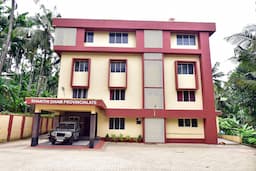
Diocese: Mangalore
Pioneers: Sisters Clemence Noronha, Christine Andrade and Hilda Lobo
Tracing the history of Shanthi Nilaya at Bagambila, Panir evokes memories of late Bishop Basil S D’Souza of Mangalore Diocese. This is because the only vast property of the Congregation 35.54 acres was purchased at his insistence. He had insisted on procuring for the Congregation immoveable property as an enduring source of income. Thus the property at Bagambila consisting of two separate plots measuring 14.40 acres and 21.14 acres belonging to a Muslim couple was procured by Sr Ernestine D’Almeida, Superior General and her team on April 23, 1980. The Ursuline Franciscan Sisters pay him due homage for his professional guidance and diligent persistence. When purchased, the plots consisted of yielding coconut and areca palms as well as cocoa plants. In order to render the property economically viable – as intended – a modest house was put up immediately. It was christened ‘Shanthi Farm’. The structure exists to date in a remodelled form, in the original location, closer to the Convent, Shanthi Nilaya. Being true to the name, the shelter has been a farm house and used solely for farm-related activites.
Sisters Clemence Noronha, Christine Andrade and Hilda Lobo, pioneers to Shanthi Farm, and the successive members namely Sisters Elizabeth Suarez, Letitia D’Silva, Lucia D’Souza, Cicilia Tauro, Florine Vas, Shanthi D’Souza, Irene D’Souza, Irene Reema D’Souza, Dominica Lopez, Wenscy D’Souza, Hazil D’Souza and Rupin Veigas have toiled at the vast property just like any other labourer. Sr Hyacinth Pinto, animator at St Joseph Convent Panir along with her Sisters supported them a good deal. Sr Gertrude D’Sa, Councillor General, in charge of land and building, assisted in maintaining the assets of the farm. Toiling at the farm relentlessly and joyfully, the Sisters have represented truly Jesus the worker. Nonetheless, their toil and living conditions rendered their situation dismal. In view of improving the state of affairs, a new convent building was put up. Sr Barbara Franko, animator of the Somarpann community supervised the construction efficiently. The house was inaugurated on Aug 20, 1990. Sisters Elizabeth Suarez, Lucia D’Souza, and Rupin Veigas were its first occupants. It ought to be noted that the house was permitted to install the Blessed Sacrament only on January 28, 1997. On the other hand, the event marked transformation and development, which is indicated in the change of name of the house from Shanthi Farm to Shanthi Nilaya.
Subsequently several developmental works were undertaken in the campus. The Farm House was renovated entirely and used as a kitchen of Shanthi Nilaya, a fibre portioned room was erected to store areca nuts, three existing open wells were revived and a fourth well was sunk in the plot purchased in 1980 with a view to providing a permanent source of income for the maintenance of the novitiate. The plot was fenced after planting in it coconut and areca palm saplings. Further, two tube wells were sunk and sprinkler irrigation was installed, a new cow shed was constructed, dairy farming was initiated and bio-gas was installed as well. Besides a hostel for women was started converting the hall of the house into fibre partitioned rooms. The hostel catered to nursing students and working women; however, it had to be closed down in 2010 due to increase in number of Sisters in the community.
It is not merely the house and farm that have been equipped with basic amenities; the Sisters too have been enthused in their task with refresher programmes. The Generalate team arranged a seminar for them as well as for all the Sisters engaged in the field of agricultural activities. The seminar arranged at Holy Rosary Convent, Jeppu on October 28, 1993 and attended by thirty Sisters was found fruitful and educative to meet the demands of a globalized world.
Over the years a resourceful and creative utilization of the property of Shanthi Nilaya was planned and implemented. In 2003 one acre of land was used to put up quarters. The residential flats named ‘Shanthi Niketan’ are rented to doctors of the KS Hegde Medical Academy. One more acre was set aside for the North-East Province. A structure erected in that plot in 2008 serves as a transit to Sisters of the North-East Province while catering to students and sick of the Province. As a means to obtain maintenance cost of its needs, Subhodini offers lodging facility to thirty medical students pursuing their studies at the neighbouring medical institutes of KS Hegde Medical College, Yenepoya Medical College, and Fr Muller Homeopathic Medical College. As a final development, the Generalate transferred the administration of Shanthi Nilaya to the Mangalore Province on May 15, 2007 where Sisters Lucia D’Souza and Hazil D’Souza were taking care of the Farm. In 2010 Sisters Clemence Noronha, Consolata Noronha, Patricia Tauro and Florine D’Souza formed the community and engaged themselves in efforts towards the yield of more agricultural products.
The Mangalore Province has continued the resourceful use of the property. Defying the distinction of superior and inferior, namely, white collar jobs as higher and agriculture or farming as lower, the Sisters have established in the campus an English medium school with CBSE guided curriculum. The Assisi School caters inventively to a rapidly growing context of Derlakatte. One is left to envisage further utilization of Shanthi Nilaya such as incorporating subjects related to ecology in the school and even setting up graduation level studies in the area of agriculture.
Along with the hustle of a large surrounding, the Sisters have not sidelined their responsibility towards their charism. They have been involving themselves actively in pastoral activities of the parish. Attending SCC prayer meetings and visiting families have been regular pastoral exercises of the community. Besides thanks to their closeness to mother earth, they are closer to people around them most of whom are farmers; they also foster ecology. The community has a painful event in its history. It is the demise of Sr Clemence Noronha, animator of the community, on December 24, 2012 due to a cardiac arrest.
Several Sisters have toiled at Shanthi Farm and several of them have been toiling at Shanthi Nilaya in various capacities. In and through their work, they have been identifying themselves totally with their fellow labourers. However, their approach to life and work has been different; it has been an approach of Jesus. Their labour of dedication is being recorded in the history of the Congregation and they are an inspiration to generations to come.

Diocese: Mangalore
Pioneers: Sisters Barbara Franko, Olinda Sequeira, Jyothi Fernandes, Severine Crasta, Emerciana Pereira and fifteen novices
‘Somarpann’, a venue designed exclusively for intensive formation, namely novitiate programme of the Sisters of the Ursuline Franciscan Congregation was established on January 3, 1983 at Derlakatte, Panir. This venture deserves mentioning the names of at least a few persons for their dedicated labour in its establishment. They are three Superiors General, namely, Sr Mary Agnes Mathias, Sr Ernestine D’Almeida and Sr Reparata D’Souza. These were responsible for: purchasing13.36 acres of land in 1951 where the future novitiate could be located; planning the existence of a novitiate building by laying its foundation stone on August 2, 1979; and realizing the vision by erecting the building on January 3, 1983 respectively. More persons were involved in working out the enterprise: Sr Gertrude D’Sa in the supervision of the construction; Bishop Basil D’Souza and Fr Edwin Pinto in financially supporting the project; Sisters Dulcine Furtado, Leira Alva and Loira Veigas in caring for the property for thirty two years while residing at ‘Lourdes Cottage’ within the Somarpann campus, and Sisters from St Joseph Panir and the Shanthi Farm in extending their wholehearted service in all possible ways and at all times.
The house was canonically erected on February 2, 1983; the Blessed Sacrament was installed in the chapel of the novitiate building on the same day. The tone of the novitiate house was set at the inaugural Eucharistic celebration. Fr Victor Piovesan in his homily unfolded the significance of a novitiate house as being ‘the power house of the Congregation which guides the novices to be transformed into Christ continuously’. In keeping with this objective, Sisters Olinda Sequeira, Jyothi Fernandes, and Aurea D’Souza guided the novices of the Congregation until the house was set aside as the novitiate house of the Mangalore Province in 1998. Thereafter, Sisters Severine Crasta and Clara Menezes along with their assistants have guided the novices especially of the Mangalore Province. Sr Gracy Mathias continues the work of formation of the novices at present. As the novitiate house has been attached with a community of Sisters, an animator was a need of the house from the very beginning. This need has been taken care by Sisters Barbara Franko, Millicent Pinto, Carmelita Monteiro, Benjamin D’Souza, Florine Vas, Nancy Ferrao, Benedicta Correa, Bibiana Noronha, Clara Menezes, Shellin Rodrigues, Rita Vas, and at present by Sr Precilla Lobo.
When the plot was purchased in 1951, a tiny house existed in it. The Sisters named it ‘Lourdes Cottage’ even though for convenience’ sake, they called it ‘Bungalow’. Sisters Dulcine, Leera, and Loira (1951-1983) in successive years, accompanied by novices during night hours, lived singly in the house in order to maintain the property. The latter also was a teacher at St Joseph School at Panir. Sometimes postulants of the Congregation would live in the house for shorter periods. Alongside teaching in the school, the Sisters have undertaken the task of planting pineapple and coconut saplings and watered them by drawing water from the well.
Somarpann is meant to be a house for formation. In spite of this fact, both novices and Sisters have been involving themselves actively in socio-pastoral activities. In fact, the novices have been socio-pastorally active right from the inception of Somarpann. They have been teaching catechism at the parish church. In the past years they have extended their service for liturgical preparation and catechism at two substations of the parish, namely, Bola and Ghatikudru. At present they extend their service in Mudipu parish On occasions of solemnities, they have been helping in the liturgy at Ammembal parish and Nityadhar parish. On Fridays they guide people to pray during adoration of the Blessed Sacrament at the Mother of Mercy parish, Panir. Along with Sisters of the community, they participate in SCC prayer meetings of the wards. Visiting families of surrounding area has been a specific feature of the novitiate; this aspect offers them experience of the serrated reality common to a large number of people in India. To underscore this factor, one batch was sent to slums in Bijapur in 1989 for one month and in the consecutive years, they have been sent to Hangal. The novices are privileged to have this pastoral and social exposure as it is an integral part of novitiate formation.
The novitiate building is a huge and compact structure compared to several other houses of the Congregation. Besides, it could claim a tranquil surrounding. Hence the house was utilized for several programmes of the Congregation. The Superiors General and their teams utilized a part of the top floor of the building for thirteen years, i.e., 1992-2005. It may be noted that during this period they have not only administered the Congregation but performed the responsibility with ease. It was edifying to see the team commuting with public transport and the Councillors General living in a dormitory within the privacy of curtains. Thus they were true models to novices and Sisters alike. The house needed some renovations at the time. The roof of the chapel and the terrace of the house were repaired. The cemented terrace was replaced with tile roof. A multipurpose hall was constructed on top of the classrooms. The novices were unsparing in their service during several programmes of the Generalate arranged in the house. In 2010 Sr Lenita D’Souza, Provincial Superior of Mangalore Province converted the ground floor of the house into quarters for the elderly Sisters of the Province. Two dormitories were converted into six self-contained rooms. Currently, eight Sisters benefit from this scheme. The presence of the elderly in the novitiate is a blessing. The youngsters draw deeply from the riches of their faith, commitment, selfless toil, and simplicity. The elderly in turn wilfully recall their days of youth. Sisters Speciosa Alvares, Crispine Braggs, Anicetus D’Souza, Servella Rodrigues and Ninian Therese were pioneers to this renovated block of the house. Somarpann has hosted Inter-Province Meeting of the novices in 2003 and 2004.
The construction of a retaining wall and a compound wall, installing solar system, portioning the dormitory into cells with fibre sheets, and painting the house have been other works undertaken to maintain and equip the house. The Generalate has always been generous to extend the monetary help towards these requirements of the novitiate. Celebrations have been a part of Somarpann. The temporary profession is an annual feature. On May 1, 1983 it was the first ever such event in the house. Six novices professed their vows on that day. In the same year, on May 8, Sr Gertrude D’Sa who was supervising the construction of the house celebrated the silver jubilee of her religious profession. Sr Simplicia D’Souza, a longstanding member and maternal figure in the house celebrated her golden jubilee on April 18, 2001. On February 2, 2007, the Convent celebrated its silver jubilee. Sr Rose Marie celebrated her seventy-fifth birth anniversary on August 15, 2010. A factor to be noted in this regard is the utilization of the expertise of the novices by the Province and the Congregation in its various programmes. The house is maintained by Nympha Sadan, Home for Senior Citizens at Bolar; it is administered by Mangalore Province. The Somarpann community is indebted to Sisters rendering their service at Nympha Sadan.
Study, spiritual exercises, community exercises, family visits, participating in funeral services of Sisters at Holy Rosary Convent, brief outings, working hours on Thursdays, these and more activities keep a novice engrossed and give a feeling that the two years are like a single day. Memorable time spent at Somarpann – in the house, in the compound, in the garden, in apostolate outside the house, – all this is cherished by each individual who has lived at Somarpann be it for her formation or her apostolic work. Somarpann continues to be a power house that not only transforms its members into Christ but also enables them to be agents of transformation in the world.

Diocese: Udupi
Pioneers: Sisters Dulla D’Souza and Benita D’Mello
Perampally, a hamlet in Udupi district lies four kilometres away from Manipal town. As a remote area, it carried its share of illiteracy, unemployment and therefore, poverty. Fr James Andrade, parish priest of Our Lady of Fatima, invited the Ursuline Franciscan Sisters to Perampally to implant quality education at Infant Mary Higher Primary School, which was languishing for want of a sufficient number, as well as to form the faith of the people in the Triune God. In keeping with the state of affairs at Perampally, the Sisters could obtain only a shed of the parish for their residence, found in the present school play ground. A new house proposed to be constructed in the present location of the Convent in 1971 was stalled due to cardiac arrest of the contractor Mr Pius D’Cunha of Valencia. However, Providence was on their side: a relative of Mr D’Cunha, Mr Gregory Rego intervened and completed the construction within four months. It was inaugurated on September 1, 1972. The Sisters must have felt certainly more secure when a plot of land measuring 48.50 cents, lying around it was procured for the Convent.
Sisters Dulla D’Souza (1969-1972), Ida D’Souza (1972- 1974), Julita Menezes (1974-1979), Adelaide Noronha (1979-1981), Assisia Crasta (1981-1983), Leena Pereira (1983-1988), Irene Castelino(1988-1995), Irene Pais (1995-2001), Emerita Monteiro (2001-2006) and Sr Irene Rodrigues (2006- ) as head teachers of the School have maintained the Infant Mary School as an icon of learning. Sr Dulla D’Souza obtained permission for higher primary level, Sr Julita elevated the School to class VII; Sr Rose secured a few cents of land for the School and enclosed the school campus with a wall; she also introduced parent-teacher association in the School. Sr Emerita was honoured with the Best Science Instructor award at State level for organizing Creative Technology for Juniors. She utilized the secured amount for providing uniform for poor students; she also gifted a computer to the School. Sr Irene Rodrigues succeeded in fulfilling the dream of a new and well-equipped school building in 2000. In the subsequent year, Guide Flock was arranged in the School. Strange enough, at present only one Sister, namely Sr Irene Rodrigues, is serving in the School, as head teacher.
In their task of forming the faith of the people, the Sisters have been accentuating pastoral work. They catechize children and First Communicants, maintain cleanliness of the House of God, join the church choir, and inspire people to take active part in liturgy. They participate in SCC prayer meetings of eleven wards of the parish; they animate Catholic Sabha, Vincent De Paul Society, St Monica Sodality, Marian Sodality, and Altar Servers Association. Besides rendering service at their own parish, they also undertake pastoral activities at parishes in Parkal and Manipal. They visit families regularly and pray with them. As part of their commitment for holistic development of people, they guide alcohol addicts towards an alcohol-free life. Their life witness has motivated several young boys and girls to choose priestly and religious life.
St Agnes Convent has been a place of convalescence for the Ursuline Franciscan Sisters undergoing treatment at Manipal Hospital. Sisters Vigil Veigas and Eugenia D’Souza were provided with finest care by the Sisters of the community. St Agnes Convent has been a conducive place for students as well. By commuting from St Agnes, several Sisters have secured their academic degrees. Sisters Rita D’Souza and Wilma Shanthi D’Almeida secured their BEd from Dr T M A Pai College of Education, Sisters Sylvia D’Souza and Molly D’Cunha won their BCom degree from Mahathma Gandhi Memorial College and Sr Shalet Menezes obtained her Diploma in Civil Engineering from Dr T M A Pai Polytechnic College, Manipal.
Listing a few remarkable events and accomplishments at Perampally down the years may serve as a fitting conclusion to this section. On the occasion of the ruby jubilee of the Convent in 2009 the rickety convent building was provided with a facelift and three rooms were converted into self-contained ones. Sr Loira Veigas, a long-standing member at St Agnes Convent (thirteen years) celebrated her golden jubilee of profession on May 6, 2002. A pre-nursery school as well as a hostel for girls were established in the Convent premises in 2010 in order to provide financial self-sufficiency for the Convent. Sisters Noella Menezes and Stella Marie D’Souza manage efficiently these projects. It is very comforting to see the Sisters making themselves available to serve the Kingdom of God in spite of all odds on their way.

Diocese: Mangalore
Pioneers: Mother Rose Saldanha and Mother Mary Agnes Mathias
Subsequent to establishing St Ursula Convent at Bolar in 1901 and Holy Face Convent at Vorkady in 1927, the Company of St Ursula had set out to establish a third convent at Bejai in 1931. Bejai was a part of the ecclesiastical territory of the Cathedral parish at Bolar. As such, the members of the Company of St Ursula by way of their special status in the Cathedral parish were functioning as extraordinary ministers of the Sacraments at Bejai. As distance between these two venues was nearly six kilometres, the band of faithful at Bejai had procured a plot from the government as a burial ground and had erected a mortuary chapel in it. From then onwards, they had the privilege to celebrate Sunday Eucharist at that location, officiated by a priest commuting from the Cathedral parish. With the appointment of Fr Sebastian Noronha as resident chaplain on March 22, 1912 by Bishop Paul Perini SJ, the spiritual life of the people began to improve perceptibly. Alongside enhancing the spiritual life of people, Fr Sebastian intended striving towards their holistic growth; hence, he opened Francis Xavier School for boys and
Lourdes Girls’ Lower Elementary School in 1915. The Company received an invitation in 1939 to assist in this noble task. They taught in the Girls’ School.
On the other hand, the Company had been truly a remnant at that phase; as such, it had been passing through a difficult time. Mother Nympha Fernandez, Superior, had died in 1909; Mother Clotilda Fernandez, her first assistant and next Superior had resigned due to poor health in 1918; Mother Martha Saldanha, the subsequent Superior had died on September 30, 1930. Following this, the charge was on Mother Rose Saldanha, the next Superior. At that juncture, and in a setting where the groundwork for apostolic activities was embarked on already at Bejai, Mother Rose took the firm decision of establishing a third convent at Bejai. Accordingly, the pioneers landed at Bejai on May 31, 1931. They resided in a make-shift shed in the current location of the convent. Their house, St Angela Convent, was canonically erected on October 5, 1935 by Bishop Victor R Fernandes.
The Sisters engaged themselves in educational, pastoral, and social apostolate in the manner their fellow religious had been doing at Bolar and Vorkady. The Lourdes Lower Elementary School in which they were teaching made enough progress over the years so that the School was upgraded to Lourdes Higher Elementary in 1940. Sr Alicia Suarez, head teacher (1944-1959), along with other Sisters placed the School on a solid academic foundation. The Sisters did not restrict themselves to teaching by any means. By reading the signs of the times, they established a technical school in 1951 in order to cater to poor girl children. Needle work, hand and machine embroidery were the main subjects taught at the technical school. A Convent building along with a chapel was planned for the Sisters with the assistence from Fr Francis J M Pinto, parish priest of the St Francis Xavier church, Bejai. The Convent was inaugurated by Bishop Raymond D’Mello of Mangalore Diocese on August 23, 1959. Sr Ernestine D’Almeida, head teacher of Lourdes Higher Primary School, had been a pillar of strength in the venture. As the number of Sisters increased at St Angela Convent due to its diverse ministries, in 1973, with the assistance of Bishop Basil, a new convent was constructed, as may be seen today.
In 1960, the Sisters started St Angela Nursery School in the parlour of the Convent. Sisters Marie Dulcis Braganza, Matilda Cardoza, Irene D’Sa and several others have seen to its establishment and resourceful functioning. Sr Marie Dulcis who spent 38 years at Bejai in three terms, after her retirement from the formal school taught the nursery children until her death on June 14, 2004. As a landmark achievement the Sisters established a high school for girl students on June 8, 1963. At its establishment, it took pride to be the only high school at Bejai and in its vicinity like Bondel and Derebail in 1960s. Ms Nympha Lobo lent her two rooms to house the children until the school building was ready in 1963. The Sisters of the Congregation of Apostolic Carmel helped in the administration of the School in its initial stage. The School made immense progress in the successive years due to the dedicated service of the head teachers and their collaborators.
The rich legacy of St Angela Convent has been carried forward not as a structure but as a human institution by several efficient animators. Sr Lucy D’Cunha with her two terms as animator has served at Bejai for thirty years (1963-1976, 1981- 1998). In order to address the acute financial crisis, she spared time to prepare wreaths and candles for the First Communicants. She also urged the Sisters to get involved in similar income- yielding activities. She could demand this of them because as a person of prayer and simplicity, she practised first and preached next. She also facilitated diligently the spiritual growth of her Sisters. Sisters Claudia Tauro, Flavia Tauro, Imelda Crasta, Gertrude D’Sa, Leena Rodrigues, Marie Therese, Cynthia Suares, Susheela Sequeira, Lilia Rasquina, Serena D’Souza, Edith Rodrigues, Matilda Cardoza, Mabel D’Souza and Ancilla Pinto have been successive animators of St Angela community; they have contributed their best to build the community at home, in the school, in the parish and in society at large.
At various times and according to the needs of the Sisters of the community, the Convent has been equipped. Some of the provisions include installing solar lights, aqua guard, water heater, and astra ole. In addition, a new kitchen, store room, room for the helper, toilets and three self-contained rooms were constructed in 2005. Timely financial assistance offered by Mr Joseph and Ms Florine D’Souza in this regard is acknowledged gratefully. The City Corporation has furnished the premises of the School and Convent including St Francis Xavier School with interlocks, which gives a decent appearance to the campus. The Sisters have been helped in their spiritual life by the parish priests as well as friars from St Ann Friary, Bejai.
The Lourdes Primary School has catered to all sections of society for sixty years. Sisters Ernestine D’Almeida, Jovita Fernandes, Edith Rodrigues, Celesta D’Souza, Luella D’Souza, and Maureen D’Souza as head teachers of the School have aimed at imparting value-based education. However, the School could not stand the competition offered by the newly emerging English medium schools in the vicinity. The number of students declined and the number of teaching staff declined as well. The School was amalgamated with St Francis Xavier School in 2000 and retained the latter name. Sr Celesta D’Souza was the last teacher among the Sisters teaching in Lourdes Primary School who passed away due to a cardiac arrest on June 29, 2001 at the age of fifty-six. The name ‘Lourdes’ was shifted to the CBSE School currently known as the Lourdes Central School, founded in 1999.
In the meantime the nursery school started in 1960 at St Angela Convent, had been functioning extremely well. As its number increased to 150 over the years, the School is equipped with a stage, an office room, and paintings on the walls of classrooms with the efforts of Sr Matilda Cardoza. The surroundings of the nursery school is furnished with interlocks. Mr Gerard Abreo and Ms Nicole Abreo, donors of the School inaugurated the newly furnished School on August 13, 2007.
In order to cater to diverse groups in varied ways, a commerce school was started at Bejai on May 13, 1975. Sr Lenita D’Souza served in the School for a year and tried her very best to get the permission from the Government. As there was another such school in the vicinity the permission was denied. Hence the commerce school at Bejai was closed down within a short time after its inception. Sr Lucy D’Souza trained women and girls in tailoring and embroidery. As an efficient and loving craft teacher, she touched many a heart. She also taught the children to pray; she instilled in them virtue of service attainable in practising little things. The St Vincent de Paul Society donated three sewing machines to the tailoring class. As the number of students kept increasing in the tailoring section, a spacious room in the basement of the Convent was allotted for tailoring. Sr Gertrude D’Sa was appointed head teacher of the Lourdes High School in 1964. Through her, the vision of putting up a new building for the high school section was realized in the same year. Fr FJM Pinto and several parishioners assisted her. Children at Lourdes High School excelled academically with distinction. Sisters Patricia Tauro, Claudia Tauro, Nonnita Pinto, Letitia Fernandes, Susheela Sequeira and Leena Rodrigues have administered the School as head teachers over the course of years. Presently Sr Leena D’Souza is the head teacher. The School was equipped with computers in 2001 donated by Mr Antony Sequeira. Slow-learners are coached in the School itself resulting in good academic performance. The school donates books and uniforms free to all its poor children. The free midday meal was served to the poor students with the help of the benefactors even before the Education Department came out with its own scheme.
A new and pro-poor apostolate was initiated at St Angela in 1999. At the initiative of Sr Susheela Sequeira, head teacher, a boarding house was opened in view of educating the girl children from the rural areas after the example of St Angela Merici. The project started with two children: Grecilda Cutinha of Salethur and Anitha Pais of Nainad. These were accommodated in a small room of the school. As the number of girl students increased, Sr Leena Rodrigues, in charge of the students, proposed to put up a separate home. Her vision was realized through Mr Sidney Pinto who donated Rs 18,00,000/- towards the building and infrastructure; the gift was a tribute to his great-grandparents Dewan Bahadur Aleixo Pinto and Martha Pinto. Its foundation was laid on September 13, 2007 and the building was inaugurated on August 15, 2008; it was christened ‘St Angela Home’. Don Francesco Saverio Bazzoffi and his Associates from Florence, Italy donated Rs 1,00,000/- towards the welfare of the boarders. In 2008 there were 38 girls and the number grew to 56 in 2010.
Apart from the education apostolate, the Sisters carry out pastoral apostolate with zeal. A large parish of 1204 families comprising 5,969 Catholics is served by the Sisters in various capacities. The Sisters are involved in animating SCC prayer meetings in eighteen of the 24 wards. They also take care of YCS, CLC, and YSM, teach catechism in the parish church on Sundays, prepare children for First Holy Communion, and distribute Communion on Sundays for six Masses by taking turns and on weekdays and feast days for two Masses. The Sisters lead the choir during weekdays and Sunday Masses. The elderly Sisters teach catechism to exceptional cases such as catechumens and students. The Sisters assist in the animation of Jeevan Jyothi camps annually arranged by the deanery and children’s camp organized in the parish for three days during Dasara vacation annually. One of the Sisters animates the social service league, another serves as member in the editorial board of the parish magazine. Besides the Sisters visit families of the parishioners regularly. Every fortnight on Tuesdays they visit the sick of the parish, pray the Rosary with them and spend time sharing in their joys and sorrows.
St Angela Convent is involved in other diverse apostolic activities too. Sr Mabel D’Souza was engaged in prison ministry; she also worked as the woman coordinator at Samanvaya, diocesan centre for Social Work situated at Urva. The Sisters study for BA, BCom, BSc, BSW, MSW, CA, and LLB courses at various educational institutes such as St Aloysius College, St Agnes College, Roshni Nilaya and SDM Law College. Owing to the conducive atmosphere provided by the community, the Sisters fare well in their studies. Sr Dulcine Crasta, for example secured first rank in MSW during the academic year 2003-2004.
A few significant concerns and events must be noted in the history of the Convent. The Convent serves as a transit to Sisters travelling to and from the government Bus Stand at Bejai. The Convent had the opportunity to host the event of perpetual profession of Sisters on April 16, 2010 and April 27, 2011. Sisters Ninian Terese PJ and Gertrude D’Sa celebrated the silver jubilee of their religious profession on May 29, 1981 and May 5, 1983 respectively. Sr Marie Dulcis celebrated her eightieth birthday on November 23, 1995. St Angela Convent celebrated its platinum jubilee on January 26, 2005. St Angela Convent has powerful intercessors in our heavenly Father’s house. They are Sr Lucy D’Cunha, a member of the community for thirty years who expired on December 8, 1998, Sr Celesta D’Souza, on June 29, 2001, Sr Reparata D’Souza, on September 28, 2003, Sr Marie Dulcis, on June 14, 2004, and Ms Magdalene Pinto, fondly called ‘Magdel Bai’, on November 3, 1998. She had served the Sisters for 65 years as cook or attending to household chores. Her funeral rites were conducted in St Francis Xavier church, Bejai and her mortal remains were interred at the parish cemetery, Bejai.
The presence of the Sisters at Bejai for a period of 83 years has been always relevant because they have been discerning the signs of the times and responding to them appropriately. They have for them the inspiration of St Angela Merici, the patroness of the Convent who motivates them to carry on the mission of Jesus Christ with ever renewed zeal.

Diocese: Udupi
Pioneers: Sisters Epiphania Fernandes and Flora Cornelio
St Anne Convent at Thottam is one of the five convents in Mangalore Province started in 1976. The pioneers arrived at Thottam on May 15, 1976. They resided in a house donated by the parish, which had been donated to it by Mr Minguel Vas, a parishioner. They had a twofold responsibility to fulfil, namely forming the faith of the people and imparting basic education. In meeting the first objective, they catechized, organized liturgical activities in the church and visited families and prayed with them. The second object was fulfilled by managing the St Ann English Medium Nursery School of the parish.
Their teaching apostolate, supposed to have been a means of income, brought in poor returns. Hence in order to procure means of their livelihood, they had to try other ways and means. In view of this, they started a nursery school as well as a tailoring class in 1976 itself in the convent building. They also began
teaching at St Ann Kannada Medium Primary School, a venture of the parishioners of Thottam founded in 1989. The school had to be closed down in 1993 as the number of the students was very low with the parents preferring to send their children to the renowned schools in Udupi. Thereafter, they attempted conducting typing classes in the Convent. All of it was an economic failure, but not their heroism. Under the committed leadership of Sr Lilly Dias, a nursery school was started in 2005 in the Convent; it consisted of pre-nursery, LKG and UKG. As the school made substantial progress, on January 27, 2009, the foundation of the nursery school building was laid and the building inaugurated on December 22, 2009. In relation to this project, the Sisters remember gratefully the financial assistance of two parishioners, namely, Fr Hector D’Souza SJ and Mr Bertrand Vas. They donated two hundred thousands, and fifty thousand rupees respectively. After the transfer of Sr Lilly Dias in 2010 Sr Eulalia Monteiro has been continuing the good work efficiently. As an incentive to children, a children’s park has been set up in the School. The Annual Talents Day of children celebrated at the School has served as a measure for publicity of the school.
The Sisters are active in pastoral activities of the parish. Besides catechizing students and First Communicants, they participate in SCC prayer meetings, visit families of the sick, animate altar servers and Marian Sodality, distribute Communion in the church, attend to the upkeep of the church, and participate in seminars conducted in the parish. They have contributed a great deal towards the celebration of the platinum jubilee of the parish held on April 24, 2007.
St Ann Community has a few memorable events in its history. We may mention the silver jubilee celebration of the religious profession of Sr Emma Vas on May 25, 1993. On January 6, 1999 the community members woke up to see the sudden demise of Sr Ruth Rodrigues caused due to cardiac arrest. On August 1, 1999 zonal recollection was held at St Anne, during which Sr Claudia Tauro conducted sessions on Liturgical Prayer. On September 15, 1999 the ‘come and see’ programme for aspirants to the Ursuline Franciscan way of life was arranged here at zonal level. In 1991 Sisters were glad to step into a new house with more amenities after having lived for fifteen years in a rickety structure. The good work of the Sisters continues to impact people, children and parishioners.
Diocese: Vasai
Pioneers: Sisters Clara Furtado, Vinutha D’Souza and Luviza D’Souza
A second establishment of the Mangalore Province at Palghar in Maharashtra came into being at the request of Mr Albert D’Souza, Chairman of Aldel Education Trust. The project has been approved by Archbishop Felix Machado of Vasai Diocese. Palghar, a city in Thane district of Maharashtra is situated 87 kilometres away from Mumbai. As a growing industrial city, Palghar offers ample scope for educational, social and pastoral apostolate.
The pioneering trio - Sisters Clara Furtado, Vinutha D’Souza and Luviza D’Souza arrived at St John Technical Campus, Palghar on June 8, 2011. The Chairman introduced them to the officials of the Trust on June 29, 2011in a formal programme arranged in their honour. On the same day, their residence St John Convent, an apartment gifted by the Trust, was blessed by Fr Abraham Gomes, parish priest of Our Lady of Nativity church, Palghar. At the occasion, the Sisters were briefed on the object of their presence in the campus as being ‘living witnesses to the values of Christ’. St John Convent was canonically erected on August 15, 2012 by Sr Doreen D’Souza, Superior General. On October 17, 2011 the Blessed Sacrament was installed in the Chapel by Fr Kiran, assistant parish priest.
The Sisters have been designated for following responsibilities at St John College of Engineering and Technology: Sr Clara Furtado, Office Executive, Sr Vinutha and Sr Luviza Junior Office Executives in the exam cell and administration department respectively. In a newly established St John International CBSE School in 2012, Sr Irene Mathias has been appointed Principal and Sr Severine Crasta, the Student Relation Officer. In 2013 Sr Rupin Veigas replaced Sr Clara in the College and Sr Severine Crasta in the community. Sr Kavitha Rani replaced Sr Vinutha and Sr Luviza was designated Office Administrator of Pharmacy and Research department. As part of their responsibility, the Sisters attend meetings at the management level. Besides, they take charge of fifty-two female students who reside at the campus.
The Sisters accord due importance to pastoral apostolate. Their parish church is situated two kilometres away from the Convent. Two Sisters catechize children on Sundays. The animator of the community and head teacher of St John School, are part of the parish pastoral council; they attend monthly meetings of the parish and carry out responsibilities entrusted to them. The community of Sisters is engaged in other pastoral activities like participating in SCC meetings, visiting families, praying with the sick and administering Holy Communion to them. They also join people at praying Rosary and conducting family prayers during the month of October, participate in special Eucharistic celebrations organized during Advent and Lenten season and join the youth and children for Christmas carol singing.
As Palghar is an industrial city, it is not surprisingly abounding in social evils. In order to help alleviate at least some of them, the Sisters collaborate with the Daughters of the Cross. They jointly organize programmes for empowerment of women, education of the girl child, health, and hygiene.
Currently, five Ursuline Franciscan Sisters at Palghar and especially at the campus of St John endeavour to bear witness to Christ by striving to achieve the motto of the Institute, ‘Serving to Educate, Educating to Serve’.

Diocese: Mangalore
Pioneers: Sisters Epiphania Fernandes, Josephine Pinto, Jane Frances D’Souza, Assumpta Lobo and Lucy D’Cunha
The Ullal-Panir parish, with its parish church located at Panir, was blessed by the apostolic activity of the missionaries from abroad. The first church building of ‘Our Lady of Mercy’ is believed to have been built in 1526. After its demolition by Tipu Sultan during 1784-1799, it was rebuilt in1873 by Fr John Baptist Rebello in a plot of land gifted to Blessed Joseph Vaz. The site existed a hundred feet away from the convent building, near the cemetery. The Ullal-Panir area has been sanctified also by Blessed Joseph Vaz, a son of the soil (from Goa) who served in various parishes including Our Lady of Mercy parish at Panir from 1681 to 1684. Fr Gaspar S Lewis, parish priest invited the Catechist Sisters of St Ursula to his parish; Bishop Victor R Fernandes approved the proposal. Should we assert that the objective of their presence at Ullal-Panir was to enhance the sanctity of the place by their committing themselves to the task of spreading the Kingdom of God? This goes without saying. Sr Rose Saldanha as Superior (1930-1945) of the Company of St Ursula as well as the canonically erected Congregation of the Catechist Sisters of St Ursula had demonstrated unquestionable saintliness in action by agreeing to start a convent at Panir, besides establishing seven convents even in remote areas such as Vorkady, Bejai, Madanthyar, Fajir, Karopady, Trikarpur, and Beltangady. She definitely deserves a place among the saints not because she has established several convents but because she had opted consciously for the least in society.
In keeping with the vision of enhancing the sanctity of Ullal- Panir, the Sisters arrived at Panir in November 1942. On the same day, the foundation stone was laid for their residence. They resided in a thatched hut until their residence was ready on May 8, 1943. In completing the construction, Fr Gaspar S Lewis was of tremendous help; he even managed to get economic help from abroad. A lower primary school, established in 1940 existed next to the old parish building. As education had not yet been valued in the place as essential, the school had small number of students. In order to address the issue Fr Lewis established a Children’s Home in 1944, which was called Orphanage. To start with, it could claim four children only. The problem of scarce number in the school was a concern of the Sisters as well, as they had taken over the administration of the school in June 1943. They tried to address the problem by creating among the people an awareness of education; they succeeded in bringing more children to the Home. This necessitated more space. Fr Lewis did the needful by erecting a building in the same location. The Children’s Home was recognized by the government on November 19, 1946; it was registered by the name De Mercede with fifty children on record.
The Sisters took over the Children’s Home on April 1, 1950. In support of its maintenance, they received a plot which existed behind the Home extending up to the main road. Sr Ernestine, Superior General, donated a part of it to the parish, which is the location of present school premises, when Fr Charles J Aranha wanted to put up a new school building in 1985. The rest of the property was sold by the parish when a new church building – the present site – was being constructed in 1987. Fr Maurice D’Souza was the parish priest at that time.
Renovating the Children’s Home was a priority with the Sisters. The task was undertaken in 1975 with the assistance of the organization of Andheri Hilfe, through the recommendation of Fr Edwin Pinto. Further, as a permanent source of income to Children’s Homes at Panir, Karopady and Vorkady a six-acre land was purchased in 1975. The Mangalore Provincialate of the Congregation is located in this property. In return the Provincialate has undertaken the responsibility of maintaining those three Homes. The Children’s Home at Panir began housing children from North Karnataka since late 1990s. A vast majority of these children have been brought from the child labour school at Bijapur; as the government-sponsored programme lasts for a year only, the Home on its own provides the opportunity for children to pursue their primary and higher primary education. Sr Patricia Tauro, after her retirement as a teacher in the school, rendered unstinted service to the children at the Home for eight years. She equipped the Home with a telephone connection, a tape recorder, and a solar system. On February 19, 2004 the Home celebrated the diamond jubilee of its establishment. De Mercede day is being held annually on a modest scale. In 2008 a new block was added to the building sponsored by Don Francesco and his Associates; the children utilize it as a study hall. The Torch Trust of Mangalore donated four cupboards and two tables to the study hall.
The Sisters had been residing almost for fifty years in a dilapidated convent building. Any new construction was not possible due to lack of land demarcation between the Convent and the Home. Sr Clemence Noronha as animator of the community initiated the process of settling the issue, which bore fruit during the tenure of Sr Hycinth Pinto. The records obtained allocate 1.02 acres of land to the Sisters and 0.66 cents of land to the De Mercede Home. The land was secured with a compound wall in 1985 during the tenure of Sr Gabriel Rodrigues. On February 5, 1992 a new convent building was inaugurated and blessed in the same location.
The Sisters at St Joseph Convent have been active apostolically. They are involved in all activities of the parish like preparation of Liturgy, leading hymns during Eucharistic celebration, distributing Communion, minding discipline in the church, teaching catechism on Sundays and maintaining cleanliness of the House of God and altar linen. They participate in SCC prayer meetings and visit families regularly and pray with them. Sr Lilia Rasquinha has rendered her valuable service at the Shrine of Venerable Joseph Vaz, Mudipu for two years practically on a daily basis.
Three dedicated souls have departed to the Lord from St Joseph Convent. They are Sr Lizia D’Mello, a jovial person on May 11, 2005, Sr Ursula Fernandes, a lover of the poor, on March 21, 2010 and Ms Rosa Thomas Pulseri known as ‘Rosa Bai’, sister of Elize Kutty of Jeppu, a committed helper to the Sisters. She died on Feb 23, 2006 after serving the Sisters for 40 years. She is buried at Panir cemetery.
It is an undeniable fact that except for the religious and educational institutes that have been mushrooming at Panir recently, Panir still portrays a dismal image of itself. The depiction is accurate to a large extent because people of the locality and its neighbourhood are poor still and little noted for their enterprising spirit. However, the spiritual, moral and even socio- economic growth that has taken place at Panir has been immense, which points to a growth in sanctity. The Sisters have immense responsibility in assisting people to realize their dignity as children of God.

Diocese: Mangalore
Pioneers: Sisters Monica Mascarenhas and Isabel Theodore
The origin of St Joseph Home for Children (Orphanage) may be traced to the orphanage Sr Alicia Suarez head teacher at St Joseph Primary School, in Vorkady had started in 1935 in order to meet the dire need the school was facing namely, an insufficient number of pupils. But the scheme did not bear desired results, and the orphanage did not flourish. On June 1, 1938, however, Sr Isabel Theodore resumed the scheme now located in the Holy Face Convent with two boys and four girls. It must be noted that her design had been motivated purely by her love for Christ which she sought to express in and through the care for the little ones. Thus Sr Isabel should be rightly regarded as the pioneer of the Children’s Home at Vorkady.
This tiny seed sprouted and grew into a mighty tree over the years; 786 children have benefited from the Home thus far. Aid from various developmental organizations like Andheri Hilfe and CODP, funding from the Kerala Government and motherly care from Sr Isabel Theodore herself from 1938 to 1941, from Sr Jane Frances Sequeira (1952-1956 and 1978-1990), Sr Prima Rodrigues (1966-1978) Sr Florine Vas (1990-1994), Sr Barbara Franko (1994-1999), Sr Veronica Gomes (1999-2000), Sr Ida D’Souza (2000-2002), Sr Irene Mathias (2002-2008), and Sr Anitha Rodrigues (2008- ) has seen to the smooth running of the Home.
On May 14, 1976 a new orphanage building was started on a separate three acre piece of land at the left side of the church with the aid obtained through the services of Fr Edwin Pinto from Andheri Hilfe. Sr Prima Rodrigues displayed exceptional courage and dedication to move over to this new building and resided there alone with the children for 12 years.
In the succeeding years, besides those responsible for the Home, several Sisters who were the animators of Holy Face Convent rendered immense service to the Home. The animators were correspondents of the Home all through. In order to equip this house a tube well was bored in 1995. During the tenure of Sr Irene Mathias a large number of developmental activities were undertaken at the Home. Some of them may be mentioned: Shielding the open well with iron bars, installing a pump, production of bio-gas, rain water harvesting, obtaining a telephone connection, renovating the roof of the kitchen, cementing the yard of the Home, fencing the cowshed with barbed wire and purchasing a new refrigerator.
In 2008, St Joseph Home for Children was formed into an independent community. Sisters Anitha Rodrigues, Candida Monteiro, Milburga D’Cunha and Jerosa Fernandes were its first members. Sr Candida was appointed warden and Sr Anitha correspondent. As the ‘Home for Children’ was altered to be the ‘Home for Candidates’ of the Mangalore Province on June 1, 2013, the children have been shifted to a bungalow which lies 0.5 kilometer west of the Home. To be precise, it is situated exactly opposite to the St Mary School on the other side of the road. The bungalow lies adjacent to the plot of one acre land, which the Mangalore Province had purchased on February 19, 2007 as play ground for children of St Mary School. The owner, Mr Abdul Rahman had retained for himself a twenty-five-cent land, which consisted of his residence (the bungalow). The Mangalore Province purchased the house along with the plot of land for fifty-five lakhs; the house contains eleven tiny rooms. A cottage exists at the rear of the house, which is utilized as teachers’ quarters.
The house was equipped by modifications, additions, and furnishings. It was inaugurated on June 2, 2013. Sisters Anitha Rodrigues, Consolata Noronha, and Philomena D’Souza are its pioneers. Most Rev. Bishop Aloysius P D’Souza visited Vorkady on August 24, 2013, and made the study of the house. He has granted permission to install the Blessed Sacrament. Accordingly on December 18, 2013 the erection of St Joseph Convent and installation was done. The children, who were with the Sisters in the other Home, continue to form the community at the new house. Currently ten children are taken care of by Sisters Anitha Rodrigures, Consolata Noronha and Philomena D’Souza. The children pursue their studies at St Joseph AUP School, as well as St Mary English Medium School. They find in the Sisters all that they look for, a parent, a friend, a guide and a leader. The children are provided with nutritious and balanced food. They are also spiritually fed with daily prayers, Eucharistic celebration and instructions on the gospel. Recreation, games, picnics are part of their curriculum. Homely atmosphere is fostered at the Home, which enables them to grow responsibly and cheerfully.
Besides rendering service at the Home, the Sisters visit families, participate in pastoral activities of the parish as well as of Miyapadav parish on Sundays. They catechize children, First Communicants and those preparing themselves to be confirmed; they animate Sodality of children. They also teach in schools. The Sisters residing at St Joseph Home have a challenge before them to vibrate the spirit of compassion, love and peace the pioneers had envisioned and lived at the inception of the Home in 1938.

Diocese: Mangalore
Pioneers: Sisters Dulla D’Souza, Fridesville Menezes, Shalini Lobo and Luella D’Souza
Sullia, an agricultural, yet undeveloped hamlet, needed assistance of a religious congregation to empower its people. At the invitation of Fr Abel Coelho, parish priest, the Ursuline Franciscan Sisters landed at Sullia on May 18, 1972. They resided in a tiny house offered by the parish. The house was occupied previously by the Bethany Sisters of the Little Flower. As they had moved to Sampaje dreading the scarcity of water at Sullia, the house was vacant and the Ursuline Franciscan Sisters occupied it at their arrival at Sullia. The Sisters received 2.15 acres of land along with the residence. As the house was in a decrepit state, a new house was deemed essential. The construction began in the same location on August 8, 1972. However its completion had to take place amidst several obstructions related to finance; the death of Fr Coelho on March 18, 1973, their pillar of strength proved to be the main snag. When the house was finally ready for inauguration on November 1, 1973, it was named St Raymond Convent in memory of Bishop Raymond D’Mello of Mangalore Diocese (1959-April 1964), who had been keen on establishing a religious community of Sisters at Sullia. He was transferred to Allahabad before realizing his dream.
The Sisters endeavoured to generate hope in hopeless situations at Sullia. Education proved to be a potent means in this regard. The St Bridgit Higher Primary School consisting of four teachers and 200 pupils at their arrival came to be transformed into a centre of learning over the years. Sr Dulla D’Souza and her successors Sisters Benjamin D’Souza, Lilly Pinto, Celesta D’Souza, Olivia Sequeira, Noella Menezes, Irene Castelino, Tresa R and Lucy D’Souza have put in unceasing toil towards holistic development of the students. As a result St Bridgit School can claim today to have built up an enviable record. Currently it has 628 students and nine members of the teaching staff.
Apart from the teaching by the Sisters at Sullia, pastoral apostolate is being carried out with utmost commitment. Catechizing, maintaining the House of God for prayer, leading the choir, training people for fruitful participation of the liturgy, animating YCS and ICYM, participating in SCC prayer meetings, distributing communion on Sundays in the parish and accompanying students to Jeevan Jyothi Camps are their regular pastoral activities. The Sisters accompany the Malayalam and Tamil speaking believers of the parish in their faith. The former are owners of rubber plantation and the latter are labourers in the rubber estate. The Sisters visit their villages of Paichar, Ivarnadu and Aletti and pray with them.
The parish welcomed an additional religious Congregation on June 4, 2000. At the initiative of Fr Elias D’Souza, an English- medium school has been started at Sullia. The Sisters of the Congregation of Regular Franciscan Tertiary Sisters (RFTS) administer the School. The Medical and Engineering College at Sullia by Mr V Kurunji has been providing avenues for the Sisters to incorporate themselves in various areas of service.
Sisters Dulla D’Souza, Benjamin D’Souza, Helena Menezes, Lilly Pinto, Celesta D’Souza, Stella Marie D’Souza, Olivia Sequeira, Noella Menezes, Irene Castelino, Marceline D’Souza, Veera Santanaz, and Lucy Gretta D’Souza have been animators of the community rendering their service to build the community within and outside. They have undertaken repairs of the house whenever needed. The community celebrated the golden and silver jubilee of the religious profession of Sr Anicetus and Sr Irene Castelino on May 1, 1999 respectively.
Besides their socio-pastoral activities, the Sisters perform works of charity. They offer hospitality to visitors who take a breather at Sullia on their way to Mysore and Madikeri for study and recreational tours. Sullia is a rather secluded area, with no convents of the Congregation in the vicinity. Nonetheless, the Sisters have been striving to bring Christ to people as well as to accompany people to Christ.

Diocese: Udupi
Pioneers: Sisters Joanina Patrao, Generosa D’Almeida and Marie Dulcis Braganza
The term ‘Kallianpur’ literally meaning a town of benevolence, is situated ten kilometres away from Udupi. The benevolence could be attributed to factors such as its two vital professions, namely agriculture and merchandise and its two parishes, namely Milagres and Mount Rosary. The rich economic and religious heritage of Kallianpur these two factors suggest, is an objective reality which ought to be appropriated subjectively especially by the populace living on the margins. The parishioners of Our Lady of Miracles church at Milagres who belonged to this category, through the representation of their parish priest, Fr Denis Joseph D’Souza, invited the Catechist Sisters of St Ursula to ally with them in their quest for empowerment both individual and communal.
Fr Denis J D’Souza approached Sr Mary Agnes Mathias, Superior General and she designated the trio, Sisters Joanina, Generosa, and Marie Dulcis as pioneers to Kallianpur. At their arrival on June 2, 1950, the Sisters received a thatched house for their residence along with an acre of land which consisted of thirty coconut trees. Thirty more trees were added in the plot which made the number sixty; a portion of the land with eight trees was reclaimed by the parish when an approach road to the Milagres College was to be made in 1978. Their simple residence was named St Rose Convent after the memory of a kind, motherly and simple Superior General, Sr Rose Saldanha who had expired on January 2, 1949. A chapel was added to the convent building in 1959 with the assistance of Fr Denis J D’Souza and on November 14, 1968 a remodelled Convent was inaugurated by Bishop Basil S D’Souza of Mangalore Diocese.
The Sisters’primary task at Kallianpur was to impart quality education at St Joseph Higher Primary School of the Milagres parish. A quick glance at their sixty years of unassuming service at the School brings out the fact that they have fulfilled the objective of their presence to the appreciation of those who knew them. Sisters Generosa D’Almeida, Margarita Rodrigues, Jovita Fernandes, Flavia Tauro, Irene Castelino, Noella Menezes, Shalini Lobo, Gabriel Rodrigues and Irene Rodrigues as head teachers along with other staff members have succeeded in changing the face of St Joseph School to a considerable degree that even the Education Department has noted it with words of appreciation. A specific feature of the School is that the Sisters have been admitting several poor children to the School under the Compulsory Education Scheme. As this design increased the number of students, Fr Denis J D’Souza extended and enlarged the school building. The outstanding service of the Sisters at St Joseph School came to an end in 2010 with the retirement of Sr Diana Saldanha. This is because the newly formulated rules of the Education Department did not permit replacement of Sisters at retirement of their senior fellow- religious. Nonetheless, the existence and mission of the Sisters at the School remains recorded in golden letters.
The Catholic Board of Education made an attempt and succeeded in transferring Sr Susheela Monteiro from St Lawrence Higher Primary School, Vijayadka to Kallianpur School in 2013 in the place of the retired lay head teacher.
As retirement of teaching Sisters has become a frequent phenomenon and replacements were not possible, it was felt necessary that the Sisters explored alternative means of livelihood. Hence a pre-nursery class was started in the Convent in 2006 under the leadership of Sr Noella Menezes. All required facilities, including a play park and annual Talent Day celebrations at the nursery class served as incentives for more admissions to the nursery school. It ought to be admitted that not everything has been bleak for the Sisters in the field of education at Kallianpur. Some other developments have taken place. The Milagres College employed Sr Lilly Pushpa as lecturer at Milagres College in the department of Social Work and Sr Bibiana Noronha has been rendering her valuable service as warden at Girls’ Hostel of the College.
Pastoral activities have been accorded utmost priority at Kallianpur. As in other parishes, here too the Sisters undertake all church-related apostolate in the church and in families, in spiritual as well as moral sphere. Besides, they assist poor students with cash and kind which points to their personal involvement in the lives of people and also their readiness for self-sacrifice. The Sisters attend camps arranged by the CRI even in the distant parishes like Arva, Miyar and Panja. A good rapport is maintained by the Sisters with the parishioners. The parish consists of 1694 members belonging to 465 families. They contributed substantially on the occasion of the post-triple centinary silver jubilee of the Milagres parish on December 6, 2005. The student candidates graced the occasion with a prayer dance. Student candidates and Sisters keep visiting regularly the senior citizens’ houses at Ozanam Home and differently abled children’s home at Manasa at Pamboor; they also present cultural programme to inmates of these houses. Encounter with these less privileged people has been contributing to the deepening of their religious call.
St Rose Convent is significant for various reasons. In 1998 the Mangalore Province was formed into smaller units called zones. The objective was to facilitate sharing or unity and to reach out in needs. The convents comprising Kallianpur, Thottam, Permapally and Bhatkal were formed into Kallianpur zone, with St Rose Convent being the zonal house. The house arranges zonal recollections, superiors’ meetings and vocation promoters’ meetings. In their spiritual exercises, they utilize expertise and services of Capuchin friars from Brahmavar and Perampally, Jesuits from Kalmady parish when it was administered by them, Holy Cross priests from Katpadi, OCD Fathers from Kota and Pilar Fathers from Kallianpur. Sisters of Little Flower of Bethany from Ozanam also profit from the spiritual exercises like exhortations, Sacrament of Reconciliation etc. The Convent has been a study house for student candidates and Sisters since Milagres College is adjacent to it. Several Sisters and candidates pursued their studies and excelled in them while residing at St Rose Convent.
Thanks to the growth in the size of the community it was found necessary to remodel the convent building with more rooms added in 2006. The remodelling of the structure included repairing the house roof and replacing the electricity wiring, putting up five fibre-partitioned living rooms, constructing five bathing rooms and fixing ten wash basins, constructing an underground water tank, fixing it a pump to water coconut palms, and furnishing the house with furniture. Besides a cowshed was constructed, the compound was walled which helped mark the boundary of the Convent and the cemetery. Building a grotto in honour of our Heavenly Mother in 2010 was an important event in the history of the Convent. St Rose had other joyful events to celebrate, which included the golden jubilee celebrations of the religious profession of Sr Veronica Fernandes who had served at Kallianpur for thirteen years. This was on May 9, 1988. The other celebrations were golden jubilee of Sr Ninian Therese on August 20, 2006 and of Sr Patricia Tauro on May 28, 2010. Since 2012, St Rose Convent forms part of Udupi Diocese with the bifurcation of Mangalore Diocese and that of Udupi.
Diocese: Mangalore
Pioneers: Sisters Genevieve Castelino, Esperanace Rego, Bernarda D’Souza, Marie Dulcis Braganza and Assumpta Lobo
Belthangady is a historic place. Its historicity consists in the resistance of Canara Catholics towards the oppressive regime of Tipu Sultan. As his captives on their way to Srirangapatna, they had preferred to give up life rather than their faith: some of them were hurled down to death from the Jamalabad rock fort, their second camp, Bantwal being the first. In 1890, during the Padroado-Propaganda controversy the parishioners (Belthangady then formed a part of Agrar parish) had put up a chapel in Gadai at the foot of the Jamalabad fort. The chapel, as a symbol of their faith, demonstrated powerfully that no threats could douse their faith on the one hand and on the other it represented an unvoiced plea to reclaim the lost glory of Christianity in Canara. Fr Pascal Mascarenhas, parish priest, however, regarded their adventure as ill-advised chiefly because of the constant attacks of malaria in the region; he erected a small church building nearer to the town in the location of the old church building. The old church building had been constructed and dedicated to the Most Holy Redeemer by Fr Piedade S D’Souza in 1908.
Subsequent to the persecution of Christians, there were large scale conversions in and around Belthangady, owing largely to the missionary activities of the Italian missionaries. It was necessary that they were integrated into the community by being formed in the Christian faith. This inevitability brought the Catechist Sisters of St Ursula to Belthangady on June 1, 1945. Their task was defined as catechizing, teaching in the school, and assisting the parish priest in the activities of the parish, especially the sacristy. Fr Rosario Fernandes, parish priest, proved a support to them in all their apostolic endeavours.
Teaching in the school was one of the objectives of their presence at Belthangady. They assumed the responsibility right from the start. Beginning from Sr Bernarda D’Souza, the head teacher, the successive head teachers toiled with singular commitment in the Parish Higher Primary School. They aimed not merely at imparting academics but also the values of the Kingdom. The School recorded incredible progress over the years.
With the realization that a high school was vital in the area, the Sisters started St Therese High School (Kannada medium, for girls only), on June 1, 1965 in the building rented by the church. Sisters Claudia Tauro and Gertrude D’Sa became its torch bearers. Owing to the friction between the parishioners and Sisters, the School had to be shifted to the convent building in 1977. With the assistance of Fr Edwin Pinto, a new building was put up in 1979 in a plot of land donated by the Diocese of Mangalore, close to the church bus stop. As no high schools existed in the vicinity, in order to cater to male students of the locality, the School came to be adapted for co-education in 1983. The School came to be distinguished for academic standard, discipline, and proficiency. It has continued to draw students to date even at a time of rush for education in English medium.
In 2001, the parish started the Holy Redeemer Parish Primary (English medium) School; Sr Benedicta D’Souza and later Sr Luella D’Souza shouldered the responsibility of administering it. In continuation in June 2006, the Ursuline Franciscan Educational Society started an English medium High School in a wing of St Therese Kannada Medium High School building. Initially, the Mangalore Province met the financial needs of the Institution. The School needed a playground, which was provided from the land of the Convent.
In keeping with the times the Sisters started a Pre-University section with Commerce and Arts streams in 2011. The academic institution has been progressing steadily. Its current strength is
143. At this point of time, a caution as well as an aspiration is in place. The caution is that with educational institutes of several levels and under ownership of different groups of people, egocentric specifications of ‘mine’ and ‘thine’ are bound to arise and they in turn are bound to generate detrimental scenes at the campus. Hence an aspiration for all individuals who might be mired in such mess is that, they transcend egoistic boundaries and bear profound witness to Christ.
Alongside the educational ministry, the Sisters carry on their pastoral apostolate joyfully and fruitfully. As catechism and value education form part of the study curricula in the School, they observe it faithfully. During weekends and on Sundays, they render their service in the parish as well as in two substations of the parish, namely, Indubettu and Manjotti. Manjotti has been a challenge to the Sisters since believers in the area have been lately deserting their faith. The Sisters’ activities in the substations as well as in the parish involve catechizing, animating the altar servers and Marian Sodality, undertaking sacristy work, distribution of communion on Sundays, teaching catechism to Tulu-speaking Catholics, visiting families, especially students, the sick and the aged, attending SCC prayer meetings of eighteen out of twenty-one wards. Most of these activities have been performed right from the inception of their existence at Belthangady. The Sisters had assisted pastorally also at Badyar parish for a number of years. This programme ended with the arrival of Bethany Sisters at Badyar in 1986.
Social apostolate also was accorded due importance at Belthangady. The Sisters carried out Mother and Child Health Care programme for several years. Sr Clemence Noronha animated Mahila Mandals; she guided women in literacy, tailoring, and in self-help group activities. One of the noble acts performed by the Sisters was facilitating high school studies of Catholic girl children by establishing a boarding house in the convent campus. The initiative was financially supported by Fr Edwin Pinto and Ms Rosy Golmann, Director of Andheri Hilfe, Germany. Its beneficiaries hailed from remote villages in and around Belthangady. The boarding house that brightened the lives of girl children was closed down in 1985, due to emergence of more high schools in the surrounding areas. Thereafter the candidates of Mangalore Province utilized the building for four years, namely, 1992-1996; currently, the building has been turned over to the student candidates of Mangalore Province.
A portion of the convent building was added in 1976 during the tenure of Sr Reparata D’Souza. Thanks to its space, the building has been used for various programmes of the Province such as Superiors’ Meeting of December 1992, the third Regional Chapter of the Mangalore Region on April 25-27, 1994, retreats for Sisters of the Region, and candidates programme from 1992 to1996 until it was moved to Sirsi. In 2006, a play school was started at St Therese Convent; Sr Maureen D’Souza rendered valuable service at it for five years. As the number of Sisters increased due to various activities in the campus, the oldest part of the Convent was demolished and a new block with self- contained rooms was put up in 2007 during the tenure of Sr Mary D’Souza, as animator of the community.
A few events of Belthangady must be noted: The untimely death of Sr Mary D’Souza on April 24, 2008 due to abdominal cancer. She had been the animator of the community and head teacher of the Parish Higher Primary School. Sr Hyacinth D’Souza celebrated the golden jubilee of her religious profession on May 11, 2007. Fr James D’Souza, parish priest built a grandiose church building, adjacent to the old church building. It was blessed in 2012. The Sisters continue to find joy in the service of God’s people at Belthangady. Their labour in the parish and school has borne fruit. It is visible in and through devout and committed Catholics, through ranks secured by children, through high positions secured in civil society etc. The challenge before the Sisters is that while basking in their past glory, they are not to forget the task lying ahead of them – to continue to be the living witnesses of the love of Christ.

Diocese: Mangalore
Pioneers: Mother Nympha Fernandez, Sisters Teresa Castelino and Flora Castelino
While attempting to put in writing the history of the convents of the Ursuline Franciscan Congregation after 125 years of its foundation, the Congregation takes immense delight to trace its roots from its Foundation House, St Ursula Convent at Bolar in South Kanara of Karnataka, India. The name of the Convent is carefully and accurately chosen to represent the Company of St Ursula, a group of twelve committed women, chosen and appointed by Fr Urban Stein SJ, the then parish priest of the Rosario Cathedral, in order to assist him pastorally. St Ursula Convent was the fruit of several factors, in particular, prayer. The first Book of Proceedings (Instruction and Report of the Assemblies of the Company) records an exhortation in the words of Sr Seraphina Noronha in February 1898: “We must pray very hard that a house might be procured for us”. At the initiative of Mother Nympha Fernandez, one of the pioneers as well as the ‘driving force’ behind the Company, a house was put up at the rear of the Rosario Cathedral, with the name, St Ursula Convent. The original portion of the house has been preserved to date as the Memory Hall. A well-known Konkani writer of the time Mr JP Rego, has rightly acknowledged her venture in the Konkani weekly Dirvem. He writes: ‘the large storied house, with a chapel attached, erected in the compound at the rear of the Cathedral in 1901 with funds collected from the elite of Mangalore was mainly the fruit of her untiring zeal’1. The house soon turned out to be the centre of the activities of the Company of St Ursula. As members of the Company, relinquishing the comforts of their affluent homes they began residing in the house. Teresa Castelino and Flora Castelino occupied the house in 1903 and Mother Nympha Fernandez in 1904.
The Company of St Ursula obtained the canonical status in 1934. The long-awaited and exceptional privilege brought along with it certain duties. One of the duties was to initiate the novitiate formation. To meet this need, a corridor was added to the existing building and it was used as a dormitory for the novices. The issue of economical self-sufficiency began to be a great concern for the Congregation. In order to address the need as well as to reach out to the needy children of Bolar and its suburbs, Mother Rose Saldanha, the nominated Superior General of the Congregation, sought and obtained permission from the Board of Directors of the Cathedral to construct a school building within the premises of the Convent. St Ursula Higher Primary School building was ready in 1937. Gradually in view of procuring extra classrooms at St Ursula, the novitiate programme and the general administration which were held at St Ursula until then were shifted to the Holy Rosary Convent, Jeppu in 1948 and 1956 respectively. In 1957 the Convent was graced with a spacious chapel during the tenure of Sr Eliza Pinto. The house was remodelled between 1984 and 1985 under the leadership of Sisters Edilburga Monteiro, the Councillor General and Gabriel Rodrigues, the Superior of the community. Great care was taken to retain the original structure intact while remodelling the house.
Due to its unique significance St Ursula Convent had been chosen to be the centre of administration. Initially all administration was held only at St Ursula. After the novitiate programme and general administration were shifted to Holy Rosary it was chosen again in 1986 as the centre of administration of the West Karnataka Region. It continued to be the main house of the Region till 1997. When the Region was upgraded into a Province in December 1997 the administration of the Province was shifted to Shanthi Dham at Derlakatte which is located eight kilometres south-east of Bolar.
The changeover of the Regional administration from St Ursula did not diminish its significance in any manner. It is sustained to be the centre of Bolar Zone; it is being utilized for several programmes and activities of the Bolar Zone. It serves to be a centre for the meetings of zonal day and zonal recollections (held quarterly), zonal vocation promoters’ meeting, meeting for internal financial auditing etc. A noteworthy factor that distinguishes St Ursula Convent is its graciousness to make itself available to the work of formation and academic studies: it accommodates student candidates and student Sisters of the Province; it has been a formation house right through. Currently student candidates of Mangalore Province reside in the house. In order to afford sufficient space for student candidates the top of the bank building in the campus was furnished as a dormitory in 1998. Besides accomplishing their academic objectives, they contribute to the spiritual and cultural heritage of the Diocese by participating enthusiastically in various activities of the Cathedral Church and the Diocese of Mangalore.
St Ursula Convent in line with its foundational vision has discerned the signs of the times and responded to them adequately. On September 27, 1996 a hostel, with a capacity to accommodate 25 students, was opened for boys desiring to pursue their education in the Rosario High School. Later on, in order to make accommodation available to women and working girls from outside Mangalore, the old school building was renovated and utilized for the purpose. Besides in the convent premises the base of the dormitory of the student candidates was furnished for the purpose of bank transactions. The building was rented out to Canara Bank on June 13, 1998. This has facilitated the economic stability of the community.
St Ursula Higher Primary School, started in 1937, must be mentioned at this point. The school had catered to the poorest of the poor from in and around Bolar region. The Sisters from St Ursula Convent took extra pains to visit the families of poor students who had dropped out of school; having re-admitted them to school, they provided free education along with books and school uniforms. As eagerness for English medium schools started diverting its pupils to two of the schools in the vicinity, namely, Rosario School and St Ann School, the Sisters were compelled to revise their proposal. On January 4, 1996, with the assistance from the Catholic Board of Education, the school was amalgamated with the Rosario Primary School. The deal was signed by Sr Doreen D’Souza and Fr Cyprian Coelho, the correspondents of the two respective schools. Subsequently, the students, teachers and the school records were moved to the Rosario School. St Ursula Higher Primary School has retained its name among Rosario Institutions and the Sisters continue to head the Primary School. At the occasion, Rs 50,000/- were donated as exgratia towards the construction of the Rosario Pre- University College by the Congregation.
The pastoral apostolate carried out by the Sisters at St Ursula, Bolar is also worth noting. Started as a Pious Association to attend to the needs of the parish and parishioners, the Congregation down the years has been fulfilling the task loyally and lovingly. The Sisters catechize at the Cathedral parish on Sundays, prepare children for reception of the Sacraments, and involve themselves actively in preparation of diocesan-level activities such as Eucharistic procession, priestly and Episcopal Ordinations, Holy week celebrations, community wedding celebrations etc. They make themselves available in particular for arrangement of vestments, seating arrangement, altar and other decorations and for distribution of Communion. They assist in the animation of Jeevan Jyothi camps of Episcopal City Varado. Their hard work, support and collaboration with others brought a great success to the diocesan-level Bible Exhibition held in 2009. They attend SCC prayer meetings, visit families especially at Bengare and join them in celebrating the Christmas. They visit the sick and the aged at Fr Muller Hospital and Home for the Aged, Bajjodi, Sisters Rita D’Souza and Euginia D’Souza in their advanced years of life contributed much to the Cathedral through the decoration of the church and the altar in particular by flowers prepared with their own hands.
A few celebrations held at St Ursula Convent may be noted. They are: golden jubilee of the religious profession of Mother Ernestine D’Almeida on May 19, 1992, that of Sr Reoline Muliyil on April 4, 1999 and of Sr Edith Rodrigues on April 18, 2009; silver jubilee of the religious commitment of Sr Ancilla Pinto on May 1, 1995 and of Sr Benny Correa on June 11, 1999. On December 30, 2001 the centenary celebration of St Ursula Convent, the ‘Foundation House’ of the Congregation was celebrated in the St Ursula premises. A light-and-sound cultural programme immortalized the event; it depicted powerfully the charism and mission of the Congregation to a general public numbering 2000. A postal stamp imprinted with the ‘Foundation House’ of the Congregation was released on the occasion. On the same day the Memory Hall of the Congregation was established at St Ursula in the location where the first members of the Company lived and prayed. The Memory Hall customarily draws Sisters towards it especially after each Congregation and Province level convention.
St Ursula Convent takes pride in the academic achievement of Sisters who have been students over there. Sisters Ivy Fernandes and Kala Nicholas have secured LLB degree from SDM College, Sr Stella Saldanha has secured 8th rank in Karnataka Open University in BA degree in 2002; Sr Anita D’Souza (of Balehonur) has secured fourth rank and Sr Leena Sequeira tenth rank in Bachelor of Education at St Ann School and Aloysius College respectively. The Convent has lost some of its long standing, exemplary and holy Sisters in the course of time. They are Sr Pauline Lobo on July 25, 1995, Sr Veronica Fernandes on June 12, 1997, Sr Rita D’Souza on March 6, 2000. Sr Jane Frances on June 22, 2010 and Sr Ernestine D’Almeida on March 28, 2012. Eliza Chako Paleli called Elize Bai, a supportive staff of St Ursula calls for a special mention. She served the Sisters for 49 years; in her old age and ill-health she wished to return to her family to Somadhadka in 2010 and she died on December 23, 2012.
Several renovations, modifications and additions to the initial convent have been made over the years; kitchen, storeroom, portico of the house, rooms in the first floor and many more such renovations. Several Sisters have put in their best in running the house in keeping with the charism of the Congregation. A great responsibility lies with the Sisters who are the present members and those that will live there in the future to make St Ursula Convent which has its rich heritage and priceless reminiscences, an oasis from where the Sisters can drink deeply and move out into the world to love and to serve....
Diocese: Mangalore
Pioneers: Sisters Leonora Menezes, Suchita Sequeira and Milly D’Souza
Vijaya Jesu Raj Convent at Kayyar is yet another instance of the Ursuline Franciscan Sisters’ preferential option for the poor. Even after 37 years of their existence at Kayyar, the Sisters still see the region underdeveloped in several areas. Kayyar is situated 42 kilometres away from Mangalore on the highway to Kasargod and further nine kilometres east of Bandyodu. At the invitation of Fr Lawrence Rodrigues in 1975 and the members of Christ the King parish, the Ursuline Franciscan Sisters arrived at Kayyar on June 1, 1976. The objective of their presence was to attend to the spiritual and other needs of people who have been neglected in the remote regions of Kayyar parish. At their arrival, as they had no house of their own, they resided for a month in the parochial house after which they shifted to the local Teachers’ Quarters where they lived for four years.
For their residence, Mr Marcel D’Souza, a parishioner, gifted them 23 cents of land. Later, they bought two plots of land measuring 76 cents and 175 cents, with the amount contributed by Deacon Sylvester D’Souza, brother of Sr Jyothsna D’Souza UFS. People assisted them in all possible ways, which served them as a motivating force to continue to serve there in spite of all odds. On October 4, 1978 the foundation stone of the Convent was laid. However, the construction was complete only after two years with the assistance of Bishop Basil S D’Souza who procured funds from Propaganda Fide. Fr Edwin Pinto, Director of Caritas India helped the Sisters a great deal. The history of the Convent records that Sr Ernestine, Superior General, (1968 - 1980) had been a pillar of strength to the Sisters. In spite of her ill-health, for example, she visited and encouraged them constantly. She even starved for lack of money while she supplied material for the construction of the Convent.
The Sisters brought about the needed transformation at Kayyar within a short period of time; they used educational, pastoral and social apostolate as means to this end. They took up teaching at Don Bosco AUP School, started in 1935 by Fr Louis Furtado, the parish priest. Sr Constance took up charge of the School from 1984 to 1996 as head teacher; the School was administered by a lay person until then. Her work brought a tremendous change in the School as well as in the locality. She encouraged poor students to attend school; she took keen interest in their well-being especially by claiming their benefits from the government. Sr Mabel D’Souza (1996-2004) having succeeded her, introduced Scouts and Guides in the School. During her tenure section for English Medium was introduced from the year 2004- 2005. Sr Leena Fernandes (2004- 2007) introduced computer education in the School.
A new school building was constructed in 1994 by Fr Elias D’Souza. In 2003, it was upgraded with two stories by Fr John Walter Mendonca. The Sisters were instrumental in collecting a large sum of money for the building. At its inauguration, Bishop Aloysius appreciated the service of the Sisters in the School. At the occasion of the plantinum jubilee of the School in 2010, the Sisters were honoured for their selfless service at the School.
Pastoral apostolate at Christ the King parish is an integral part of their life at Kayyar. The parish had come into being in 1934 when Fr Faustin Aranha, parish priest at Bela, purchased a 2.13 acre land and put up a chapel in it. Currently, the parish has 235 Catholic families with 1280 Catholics; which is divided into ten wards. The Sisters are involved actively in catechizing, preparing children for reception of sacraments, distributing Communion, cleanliness of the House of God, animating Altar Servers, YCS, Marian Sodality, Women’s Sodality, SVP and Catholic Sabha and ICYM both in the parish and in Kasargod Varado. They attend SCC prayer meetings in all ten wards, pray Rosary in families during the month of October and guide the parishioners in preparing meaningful Sunday liturgy. They also render service in St Lawrence substation at Permude. One of the Sisters on regular basis helps in liturgical and other activities of the church. Selfless service of the Sisters in the parish activities has been acknowledged and appreciated by Bishop Aloysius at the occasion of First Communion in 2008.
The socio-economic development of people has been also a concern of the Sisters at Kayyar. They have animated the MCH programme. Sr Irene Albuquerque has trained a number of young girls in tailoring and craft; this has enabled them to acquire self-reliance. Sr Nazarita D’Souza trained people in herbal cure. Memories of these two great missionaries along with those of their beneficiaries have been imprinted not only in houses of people, but also on the walls of the Convent. Their regular contact with people has brought about spiritual renewal at Kayyar: several alcohol addicts have come out of their addiction.
Animators like Sisters Leonora Menezes (1976-1981) Ursuline Frank (1981-1983), Nazarita D’Souza(1983-1987) who initiated cultivation of paddy in the compound in view of obtaining self-sufficiency, Sophia D’Souza (1987-1990) who initiated rearing cows for the same purpose, Constance D’Souza (1990- 1996 ) Mabel D’Souza(1996-1998 and 2003-2004), Helen D’Souza(1998-2003), Leena Fernandes (2004-2007), Severine D’Cunha (2004-2013) and Monthin Gomes (2013 - ) along with other Sisters brought about substantial development in the Convent. Manual labour was a specific trait of the Sisters at Kayyar. Working in the coconut grove, carrying its products as well as fodder on their head along the road demonstrated their Franciscan spirit. They not only preached but also practised what they believed.
The Convent has been both renovated and equipped in the course of years according to their need. In 1995 the LPG cooking gas was installed, in 2000 water connection was provided for the coconut garden, in 2002 the existing dormitory was partitioned into four rooms and the compound wall was constructed. These refurbishing claim a mention in the history of Vijaya Jesu Raj Convent because to someone who has struggled to light fire in the oven to prepare even a cup of tea, to someone who has watered the coconut trees by drawing water from the well and to someone who has put up with lack of privacy in common dormitories, these renovations matter a great deal. Other works such as rain water harvesting, repair of toilets, repairing the chapel, especially the altar, were also undertaken. Fr Edwin Pinto donated a television set to the Convent.
The Sisters have kept alive the initial spirit of simplicity and commitment. Impact of their life witness is seen in the number of vocations the parish has generated. There have been 40 vocations to priestly and religious life thus far from Kayyar. The great work of the Sisters endorsed by life witness in the service of the marginalized has been recognized by people of other faiths as well. At the occasion of platinum jubilee of Christ the King church, Kayyar in 2009 Swamiji Param Pujya Sri Sri Sri Rajayogi Sadguru honoured Sr Severine D’Cunha. She received the honour in the name of all the Ursuline Franciscan Sisters who have been striving at Kayyar ever since the inception of Vijaya Jesu Raj Convent.
