
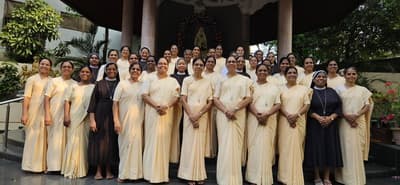
The leadership gathering of the Ursuline Franciscan Congregation with the theme: To Lead as Jesus Led’ from 6th to 9th March 2025, was a transformative experience, guiding participants toward a Christ-centered approach to leadership. The sessions covered essential aspects of ecclesial relationships, canonical provisions, communication, contemporary challenges, and the mission of religious superiors.
The leadership gathering of the Ursuline Franciscan Congregation with the theme: To Lead as Jesus Led’ from 6th to 9th March 2025, was a transformative experience, guiding participants toward a Christ-centered approach to leadership. The sessions covered essential aspects of ecclesial relationships, canonical provisions, communication, contemporary challenges, and the mission of religious superiors.
Foundations of Leadership & Ecclesial Relationships
Fr Daniel Veigas OP Episcopal Vicar for religious in Mangalore Diocese, set the tone by emphasizing the mutual relationship between diocesan Bishops and religious Superiors. He highlighted two critical areas: the establishment of Congregations, where the charism of the founder must align with ecclesiastical norms, and the apostolate, where coordination under diocesan oversight ensures pastoral integration. Canonical and practical guidelines, including written agreements and regular dialogues, were underscored as means to prevent misunderstandings and foster mutual respect.
Effective Communication & Constructive Feedback
Fr. Edward SJ illuminated the principles of constructive feedback, stressing spiritual and emotional sensitivity. He underscored the importance of appropriate timing, specificity, and a supportive approach to ensure that feedback fosters communal growth. Leaders were encouraged to avoid pitfalls such as public humiliation, harsh language, or assumptions, instead practicing active listening and respectful dialogue.
Contemporary Challenges & Principles of Religious Leadership
Fr. Ronald Pais SJ addressed modern challenges in religious life, including declining vocations and the shift from survival to mission mode. Effective leadership demands trustworthiness, participative decision-making, and fostering a high-trust culture. Jesus’ leadership, characterized by humility and service, served as the model for drawing out the best in others.
The Mission of a Religious Superior
Fr. Freddie D Silva SJ outlined the core mission of religious Superiors—building community, discernment-driven decision-making, and addressing vocational crises. Practical strategies, such as faith-sharing, structured discernment, and vocation support, were highlighted to sustain vibrant religious communities.
Concluding Reflections
Leading as Jesus led calls for humility, service, and communal trust. Clear communication, servant leadership, and adaptability remain key to fostering a mission-driven Congregation. This gathering reaffirmed our commitment to Christ-centered leadership, ensuring that our mission remains rooted in faith, service, and love.