
The Catechist Sisters of St. Ursula
Canonical Erection
The humble beginnings of the Company of St. Ursula gradually blossomed into a wider movement of faith and service. Inspired by the spirit of St. Angela Merici and animated by a deep desire to serve God and His people, the members continued their apostolic work with simplicity, dedication, and remarkable zeal. Their commitment to catechesis, education, pastoral assistance, and service to the poor enabled the Company to make its presence felt beyond the parish of Rosario. In time, the little group began to spread to several other parishes in and around Mangalore.
As the number of members increased and their apostolic activities expanded, a new desire began to take shape among them. The women who had once gathered as a pious association were increasingly living a life that resembled that of a religious community. In several places, members had already begun to live together in small convents, dedicating themselves more completely to prayer, community life, and apostolic service. Their experience gradually convinced them that the time had come to seek formal recognition from the Church and to organize themselves as an authentic religious institute.
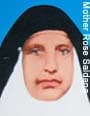
At this important stage in their history, Mother Rose Saldanha emerged as a woman of vision, courage, and perseverance. With deep faith and unwavering commitment to the Ursuline vocation, she took the initiative in presenting the cause of the Company before the ecclesiastical authorities. The members placed their hopes and aspirations before Bishop V. R. Fernandes, the Ordinary of the Diocese of Mangalore, seeking canonical recognition for their growing community.
The journey towards recognition was neither immediate nor easy. The Bishop appeared to hesitate for several years before granting the request. During this period of waiting and uncertainty, the young association experienced both joys and difficulties. Some of the younger members, seeking a more established religious life, eventually joined other recognized religious Congregations. Their departure was undoubtedly a challenge for the Company, yet those who remained continued to hold firmly to their vocation and patiently awaited the Church's decision.
For the Ursulines, this period became a time of testing, purification, and deeper discernment. Their perseverance demonstrated that their desire to become a religious institute was not merely an organizational aspiration but sprang from a sincere conviction that God was calling them to a life of consecration and service. They continued their mission faithfully, trusting that the right moment for official recognition would eventually come.
At last, after years of prayer, waiting, and patient effort, a decisive moment arrived. On 13 May 1934, the Company of St. Ursula received its Canonical Erection and was officially recognized by the Church as a religious institute of diocesan right. This marked a momentous turning point in the history of the Mangalore Ursulines. The little seed planted by Fr. Urban Stein decades earlier had now grown into a formally recognized religious congregation.
With this canonical recognition came a new name: “The Catechist Sisters of St. Ursula.” The name itself expressed the distinctive character and priority of their mission. The word Catechist was not merely a title; it reflected the heart of their apostolic vocation. From their earliest days, the members had understood that every work of charity and service finds its deepest meaning when it leads people towards Christ and strengthens their faith.
The emphasis on faith formation and catechesis therefore became an essential feature of the Congregation's identity. Through the teaching of Christian doctrine, preparation for the sacraments, religious education, pastoral ministry, and personal accompaniment, the Sisters sought to nurture a living and mature faith in children, young people, families, and communities. Their apostolate was not limited to words or instruction; it was expressed through a life of prayer, witness, compassion, and selfless service.
Along with the canonical erection, the newly prepared Constitutions were approved by the Holy See. This approval provided the Congregation with a more definite ecclesial structure and strengthened its identity and mission within the universal Church. The Sisters could now continue their apostolic work with a clearer sense of purpose and a recognized place in the life of the Church.
The events of 13 May 1934 were therefore much more than a canonical formality. They represented the culmination of years of faith, sacrifice, perseverance, and prayer. The journey from the simple Company of St. Ursula to the Catechist Sisters of St. Ursula reflected the gradual unfolding of a divine plan through the generosity of many women who had given themselves to God and to His people.
The new name became a lasting reminder of their foundational mission: to know Christ, to live His Gospel, and to make Him known through faith formation and loving service. Rooted in the spirituality of St. Angela Merici and inspired by the vision of Fr. Urban Stein, the Catechist Sisters of St. Ursula entered a new chapter in their history—one marked by deeper consecration, stronger community life, and an ever-expanding commitment to the mission of the Church.
Thus, on that memorable day in 1934, the dream that had begun with a small group of dedicated women in Mangalore received the Church's formal recognition. What had started as a simple response to the needs of a local parish had become a religious family with a distinct identity and mission. The Catechist Sisters of St. Ursula would carry this legacy forward, allowing the seeds planted by the pioneers to bear fruit in generations to come.
